24/7 plumbing done right across the Inland Empire
From a 2am burst pipe and blocked sewer line to water softeners and tankless water heaters - licensed, insured plumbers with up-front pricing and a workmanship guarantee.
Repairs, drains & sewer lines
Emergencies to upgrades - fixed fast, priced up front. Sewer camera inspections, drain cleaning, trenchless repair, water heaters, and more.
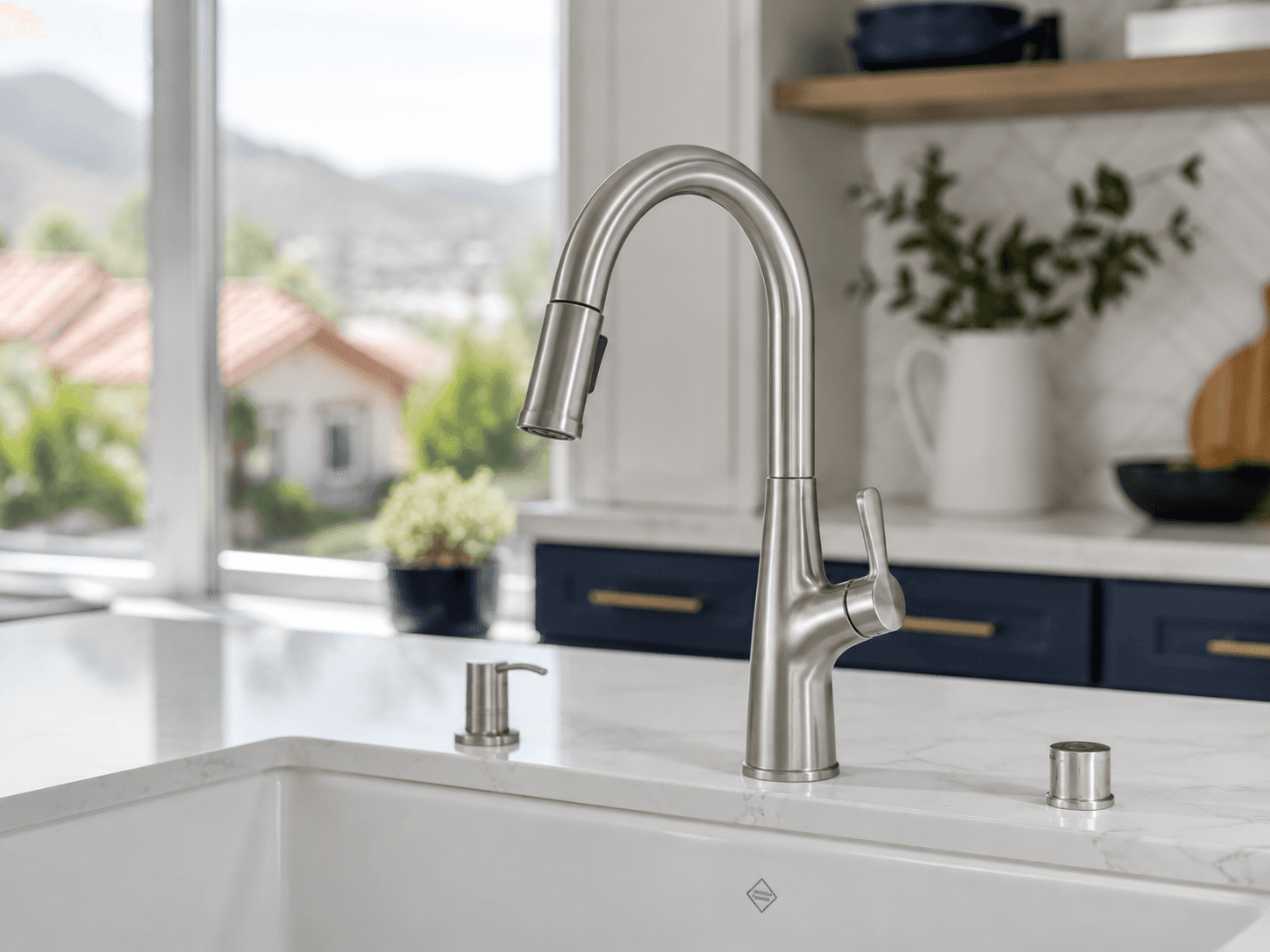
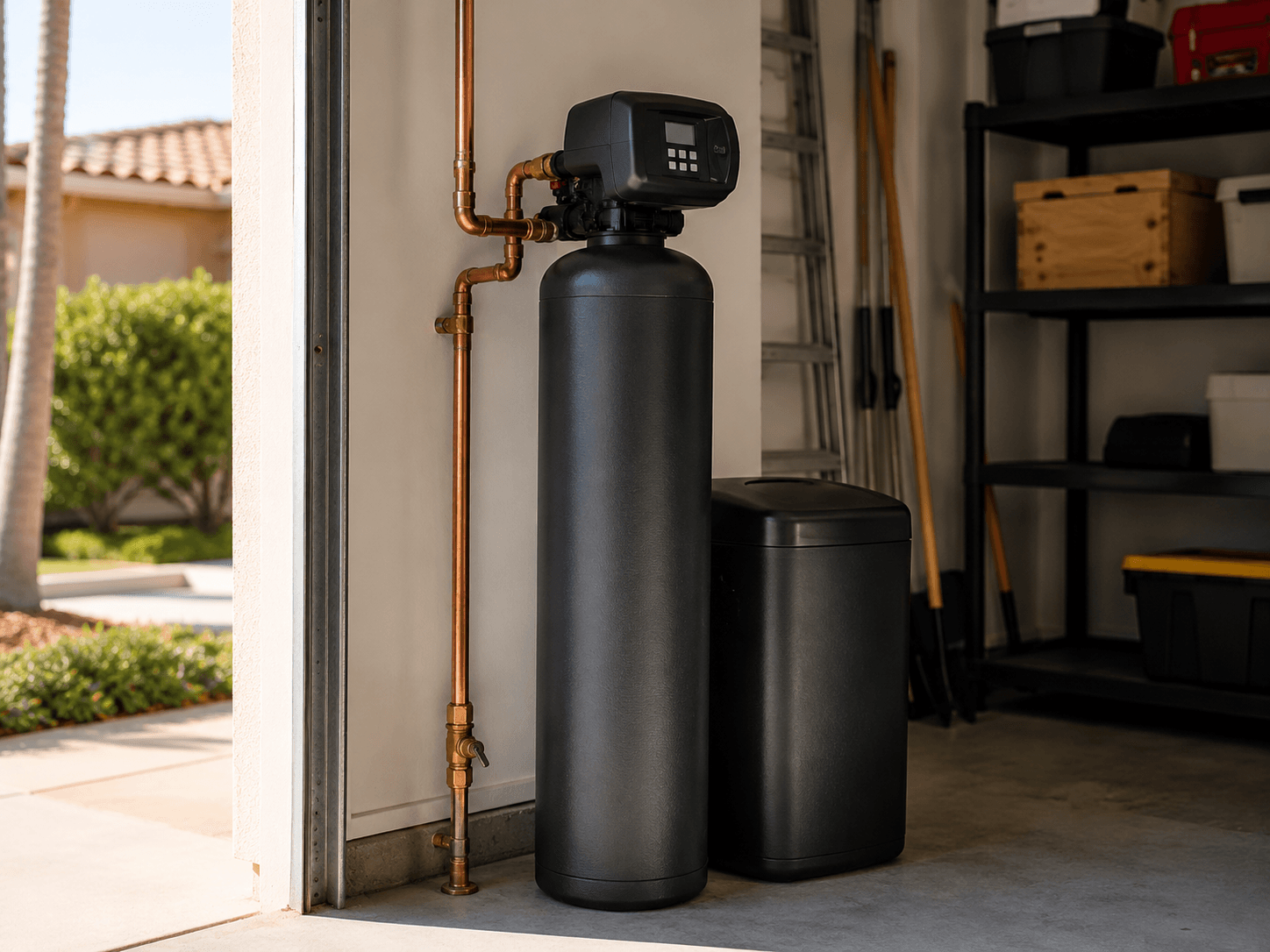
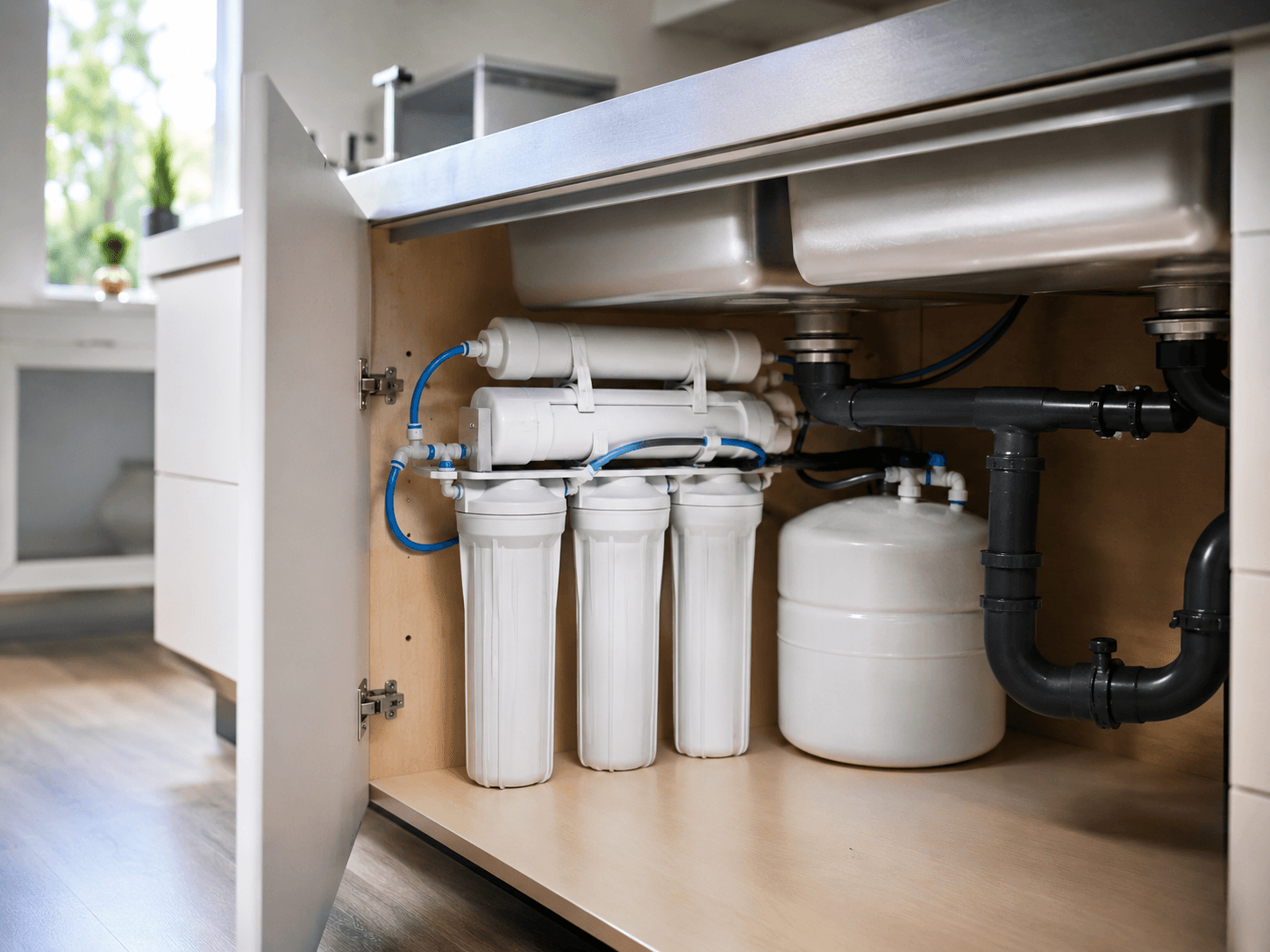
Better water for your whole home
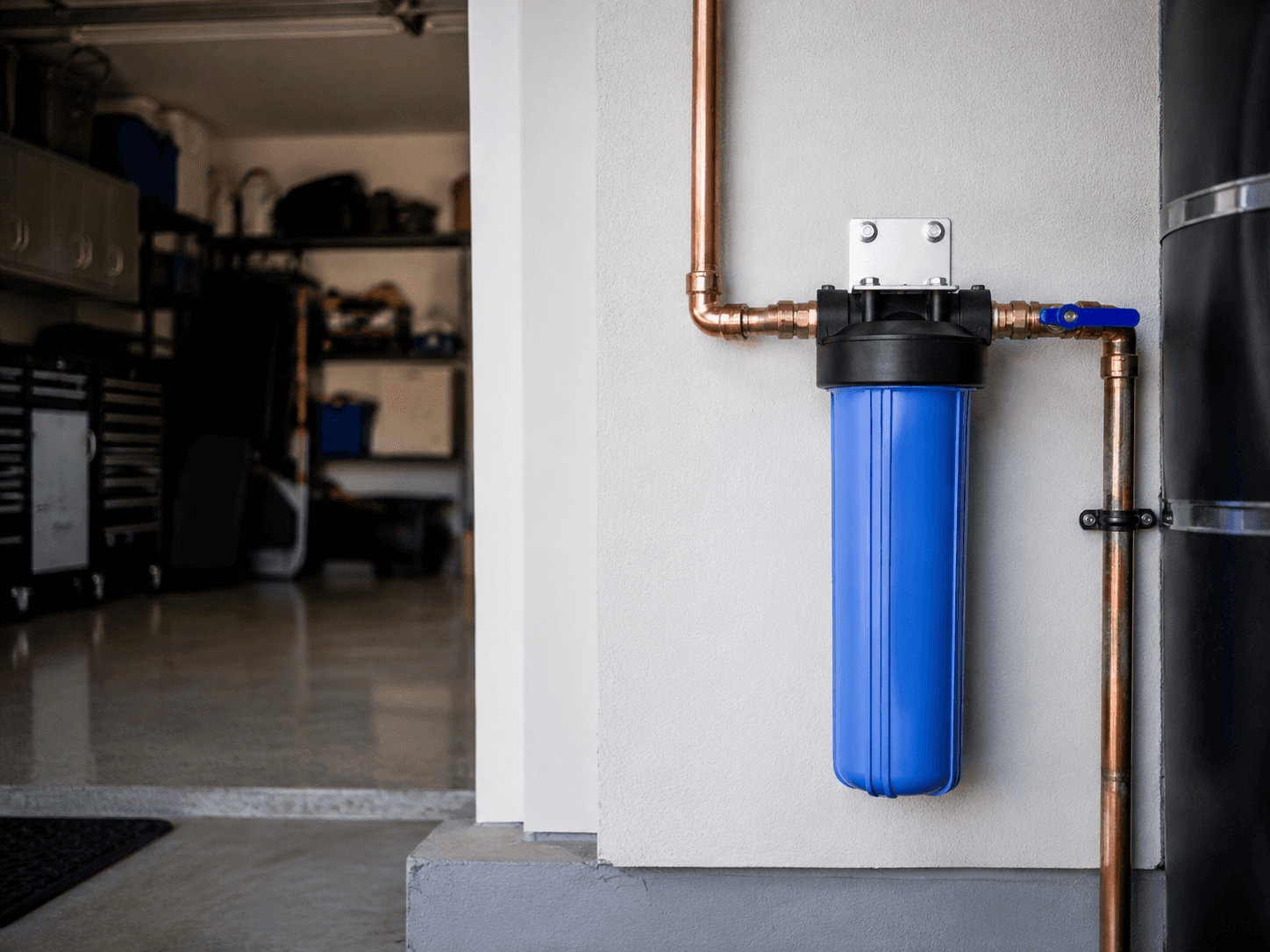
Softeners, reverse osmosis, and whole-home filtration - the upgrades Inland Empire homeowners ask for most.
Plumbing questions
Straight answers about emergencies, repairs, slab leaks, drains, and water heaters.
Who do I call for a burst pipe at night in San Bernardino?+
Call First Call Plumbing & Restoration at (909) 751-2323 - the line is answered 24/7 by a real person, including nights, weekends, and holidays. We are based in San Bernardino and serve Riverside and San Bernardino counties, with emergency arrival typically in 1-2 hours depending on your location and call volume. While you wait, shut off the main water valve. Learn more about our 24/7 emergency plumbing.
What should I do first when a pipe bursts?+
Shut off the water at your home's main shutoff valve first - it is the single most important step. In many Southern California homes the main shutoff is outside on the front or side of the house near a hose bib, or in the garage. Next, stay away from water near outlets, turn off your water heater, call an emergency plumber, and take photos for insurance. Our burst pipe guide walks through each step.
Is a leak an emergency or can it wait until morning?+
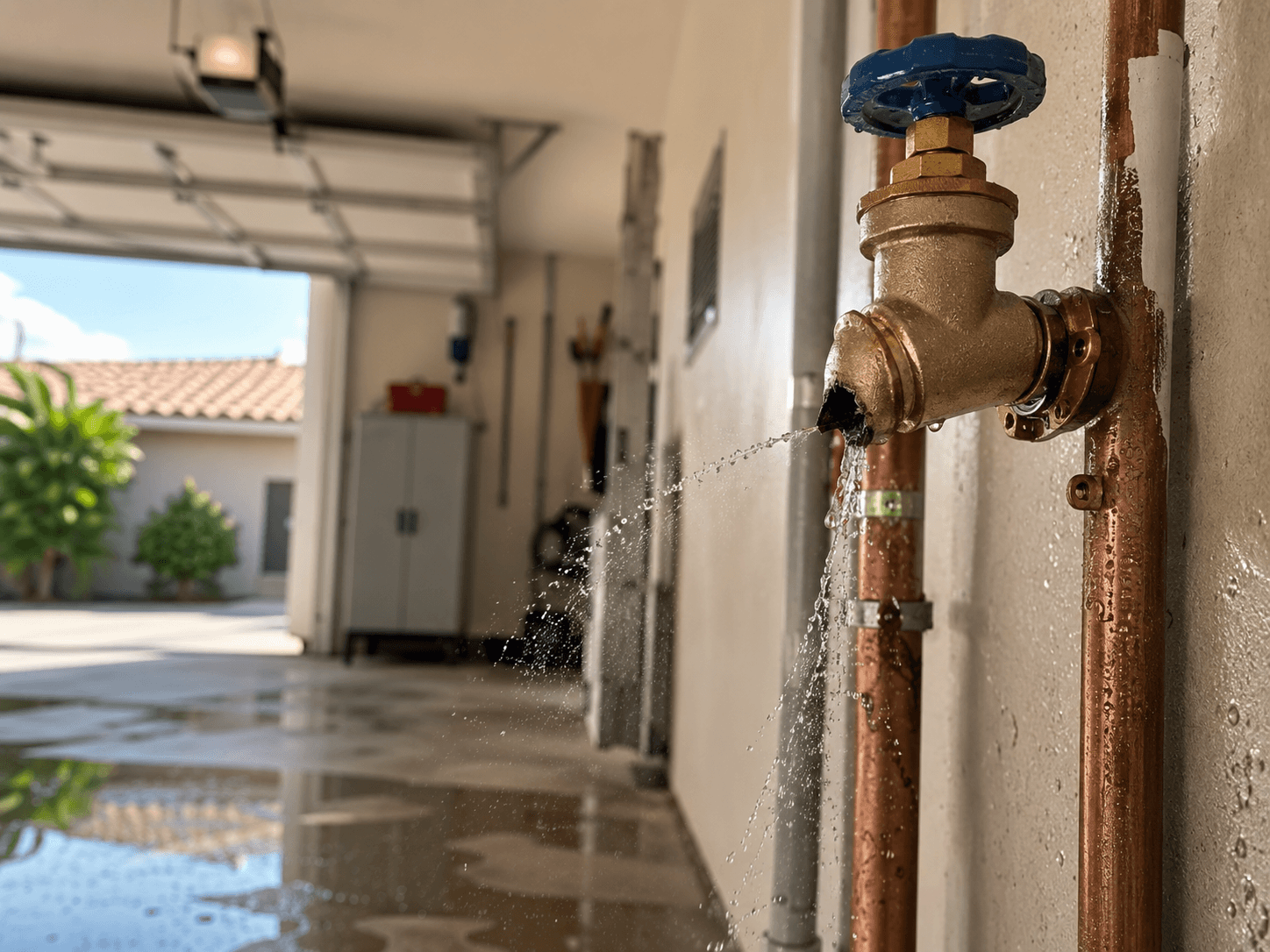
A leak is an emergency if water is spraying, coming through a ceiling or wall, reaching electrical outlets, or will not stop at the fixture's shutoff valve. Sewage backing up into the house is also an emergency. A slow faucet drip, a running toilet, or a small under-sink leak you have already stopped can usually wait for a regular appointment.
What should I do if I smell gas in my house?+
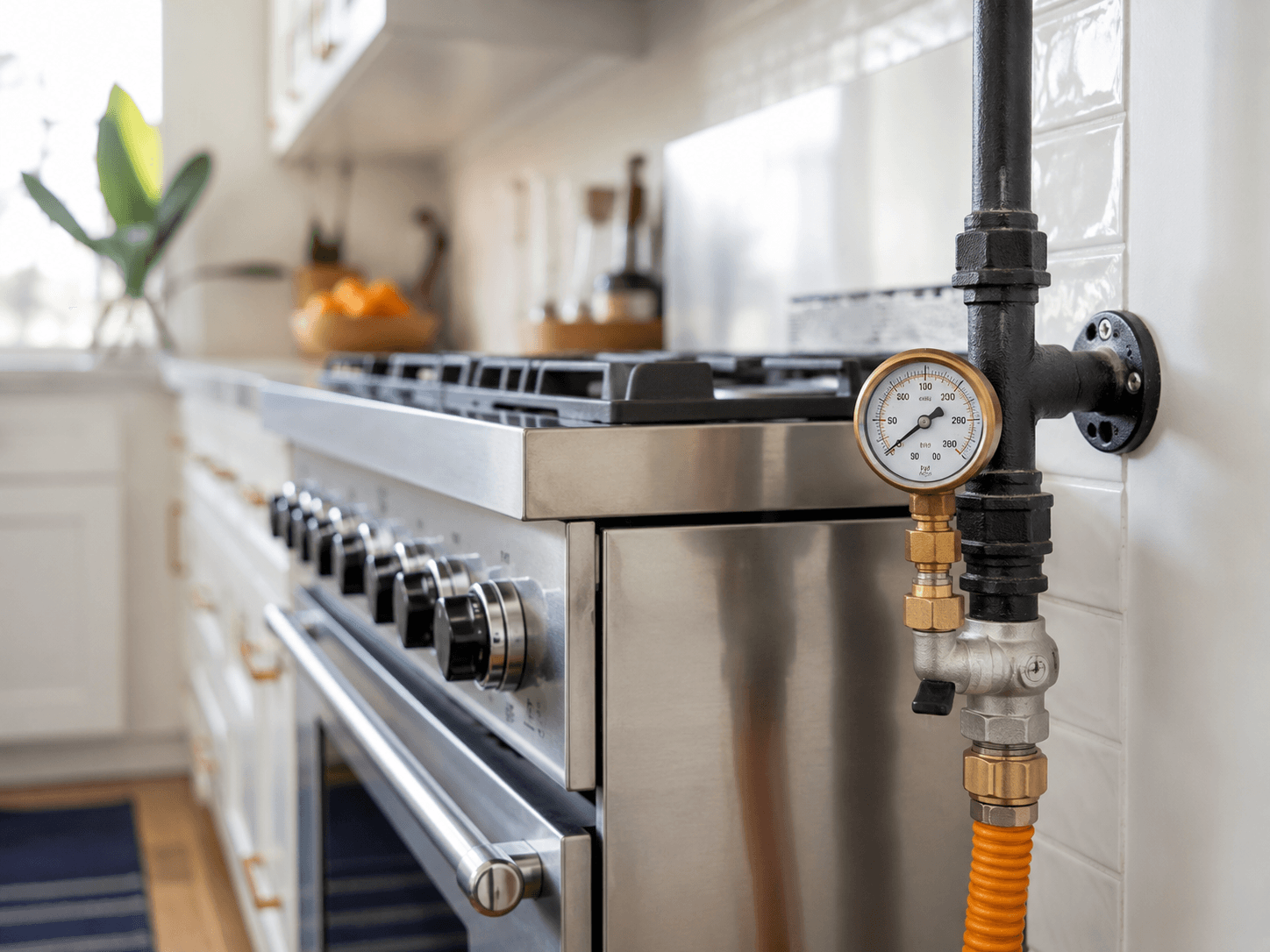
If you smell gas, leave the house right away and call your gas company from outside. Do not switch lights or appliances on or off on your way out, since a spark can be dangerous. Once the gas company has made the home safe, a licensed plumber can find and repair the leak. First Call Plumbing & Restoration provides gas leak detection and repair with pressure testing and permitted, code-compliant work.
What do I do if sewage is backing up into my house?+
Treat a sewage backup as an emergency: keep people and pets out of the area, stop running water in the house, and call a plumber right away. Sewage is Category 3 water that can carry harmful bacteria, so cleanup should be done by professionals with protective gear. First Call Plumbing & Restoration can clear the line and handle the cleanup and sanitizing with one team.
Who do I call after a house fire in the Inland Empire?+
Once the fire department says it is safe, call a fire and smoke damage restoration company to secure the home and start cleanup. First Call Plumbing & Restoration provides emergency board-up and tarping, soot and smoke odor removal, contents cleaning and pack-out, and full reconstruction across Riverside and San Bernardino counties. We also document the damage for your insurance claim. See our fire and smoke damage restoration service.
What are the signs of a slab leak?+
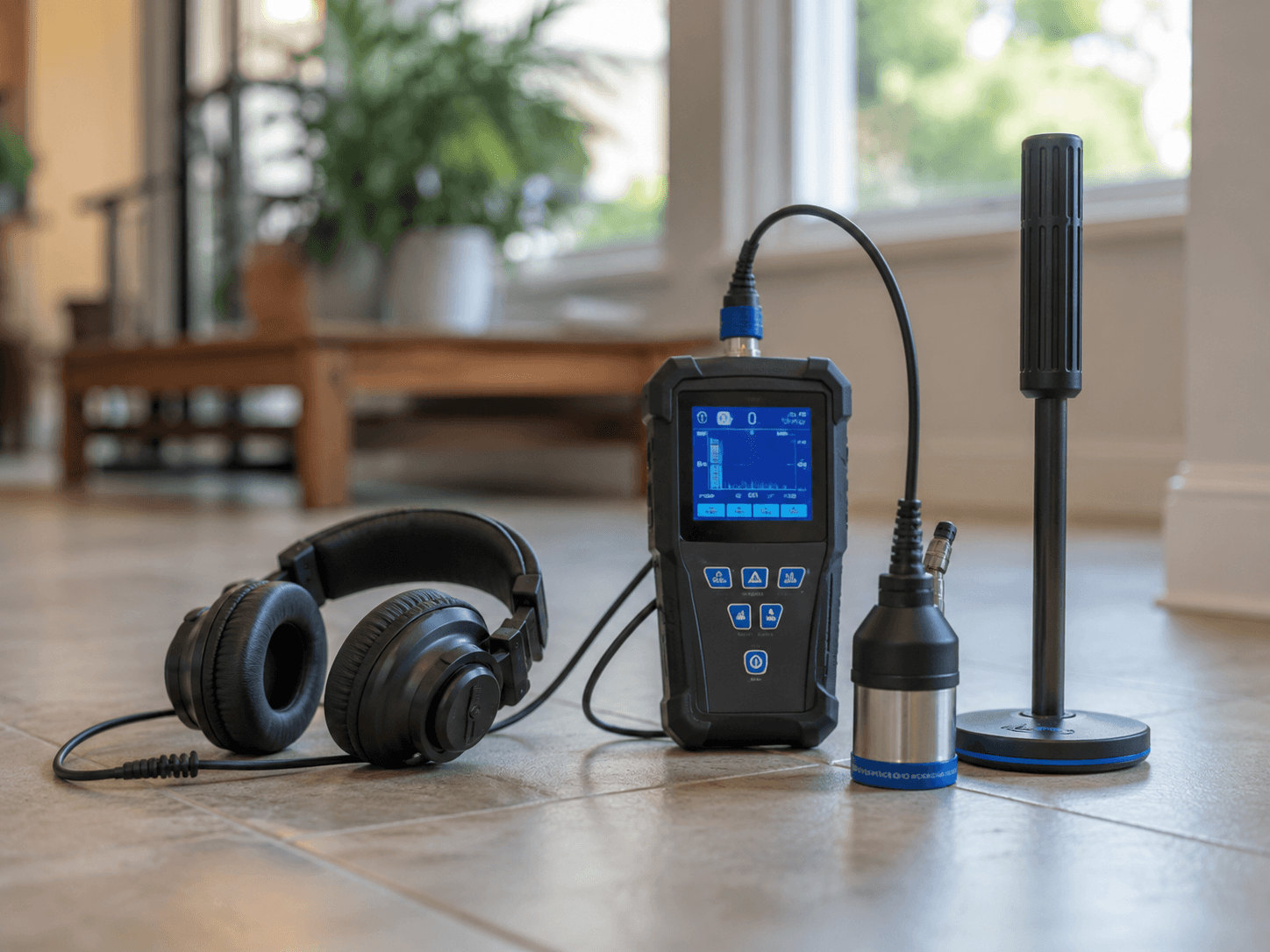
The most common signs of a slab leak are a water bill that rises without more use, warm spots on the floor, the sound of running water when everything is off, and a water heater that runs constantly. Damp carpet, warped wood floors, loose tiles, and a musty smell near the floor are also clues. To check, turn off all water and watch your meter for two hours. See signs of a slab leak.
When should I repipe my house?+
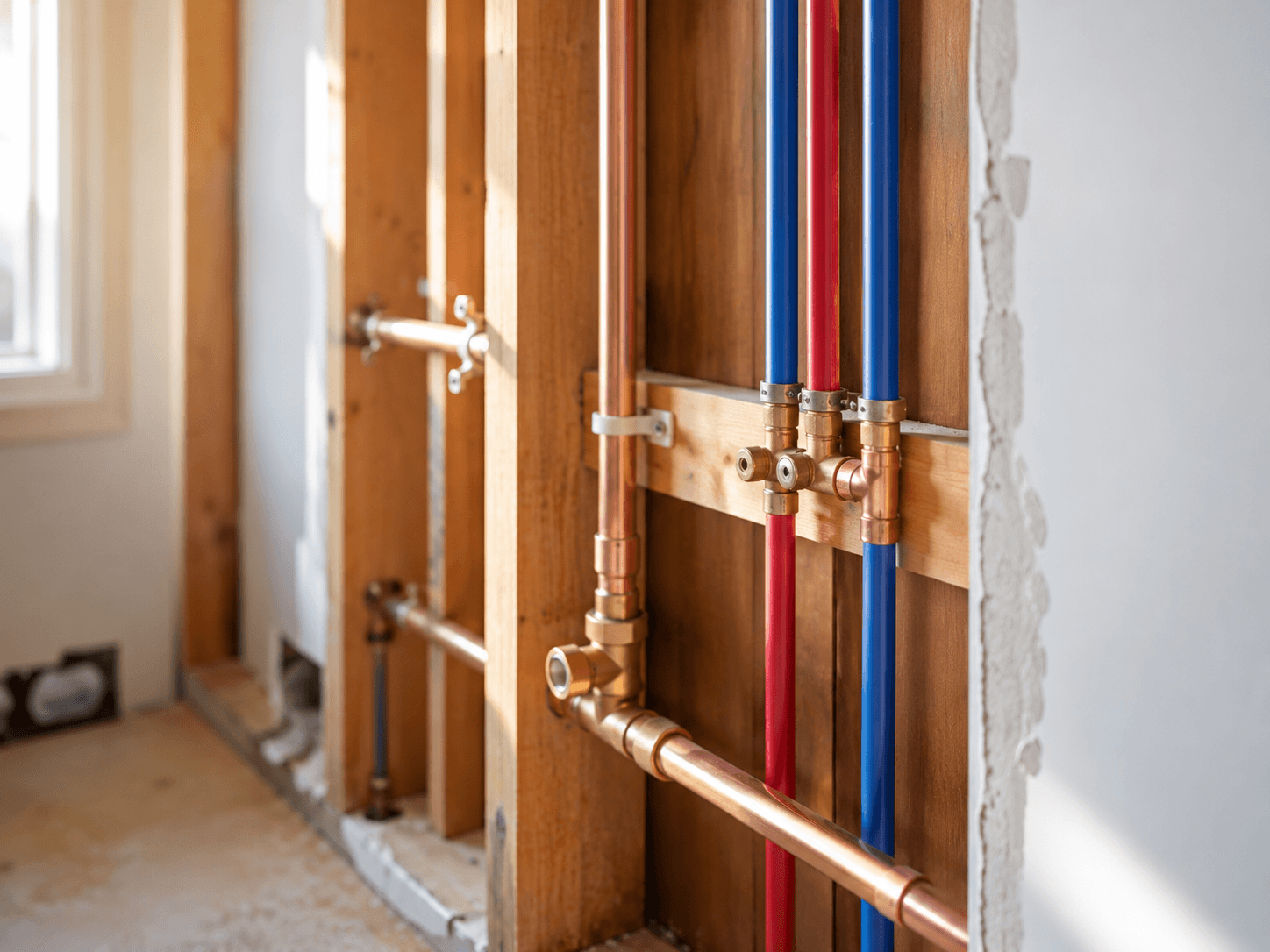
Consider repiping when you have had more than one leak, your pipes are old galvanized steel or aging copper, or you also have low water pressure or discolored water. Galvanized pipe corrodes from the inside, and when one section fails, others are often close behind. A repipe replaces the water lines with new copper or PEX and ends the cycle of repeat repairs.
What is the difference between snaking and hydro jetting?+
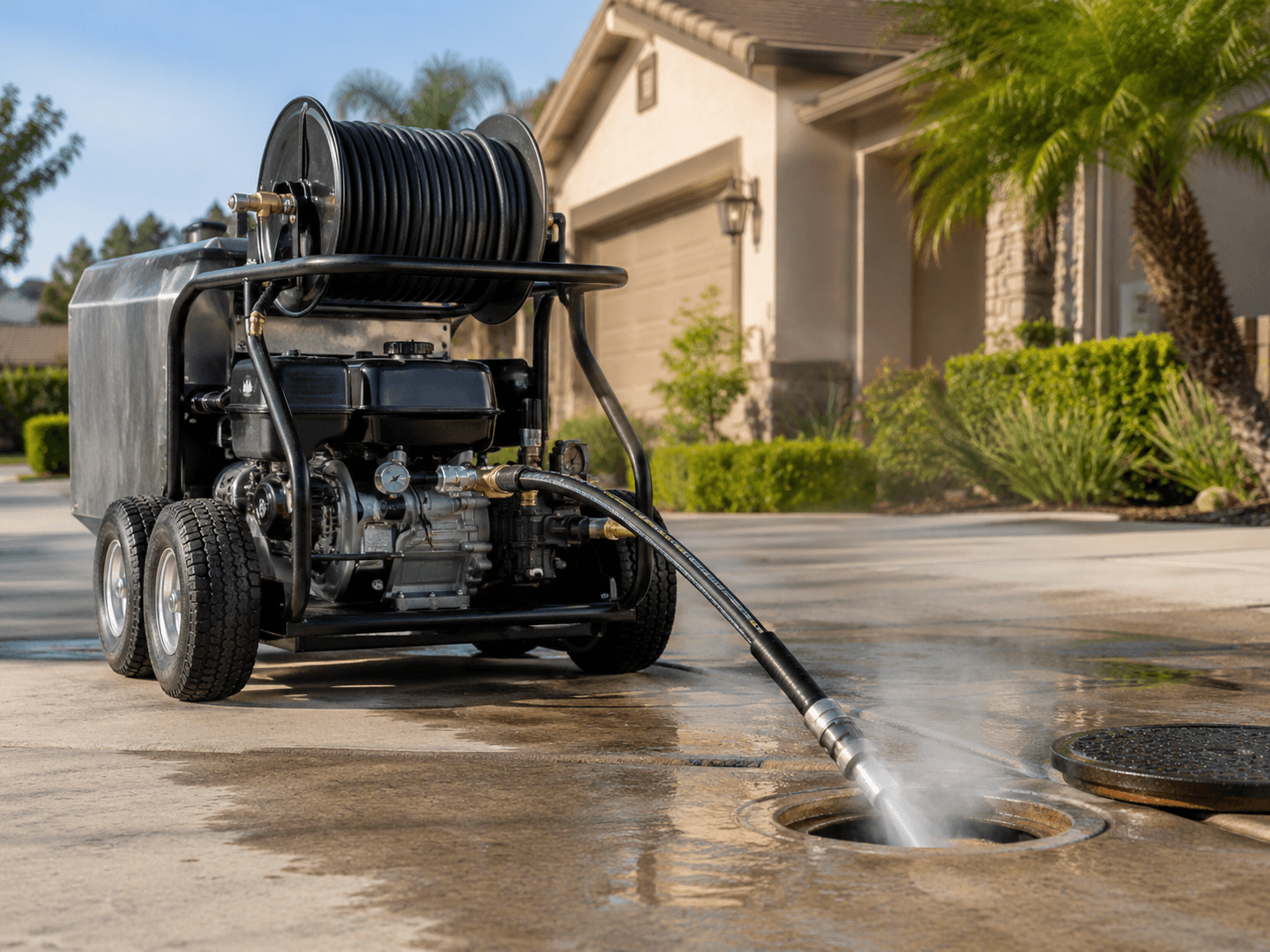
Snaking uses a rotating cable to break through or pull out a clog, while hydro jetting uses high-pressure water to scour the inside of the pipe clean. Snaking is a quick, affordable fix for a single clogged drain. Hydro jetting is better for grease buildup, tree roots, and clogs that keep coming back, because it clears the pipe walls so the line stays open longer. Learn more about drain cleaning and hydro jetting.
Can a sewer line be replaced without digging up the yard?+
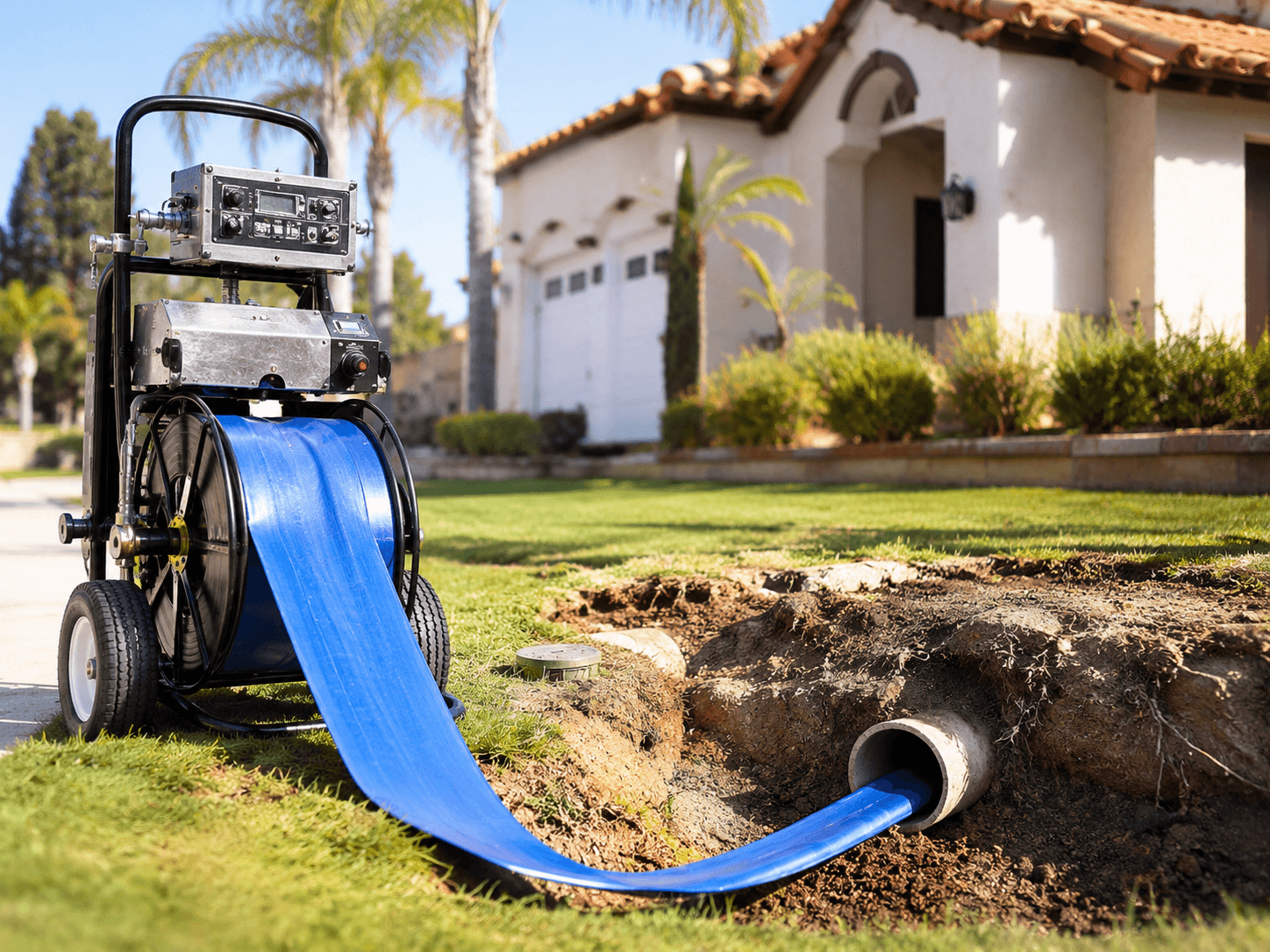
Often, yes - trenchless sewer repair can reline or replace many sewer lines through small access points instead of a long trench. The two main methods are pipe lining (CIPP), which forms a new pipe inside the old one, and pipe bursting, which pulls new pipe through while breaking apart the old line. A sewer camera inspection shows whether your line is a good fit for a trenchless repair.
Should I get a sewer scope before buying a house?+
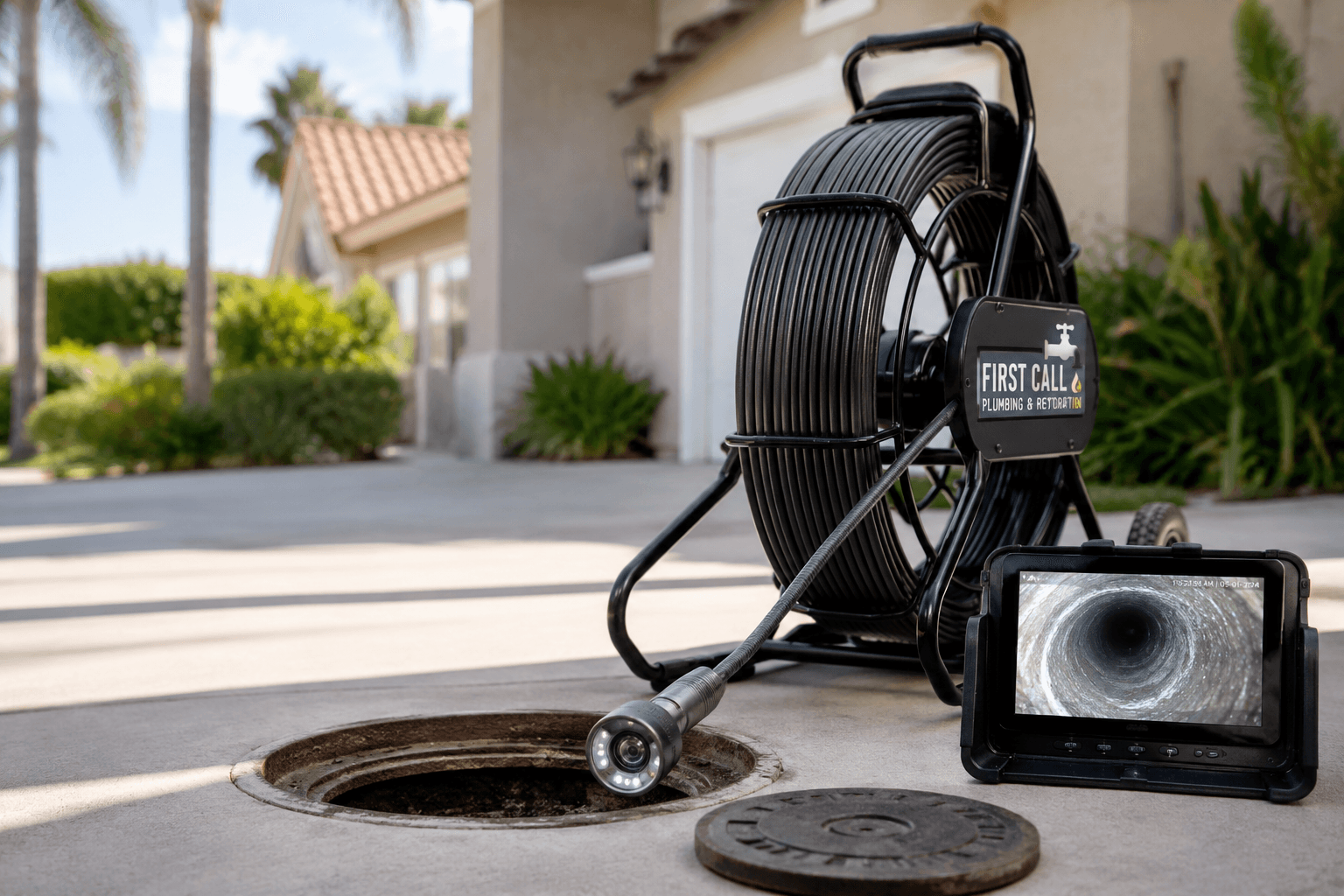
Yes - a sewer scope is worth it before buying a home, because a standard home inspection usually does not check the buried main sewer line. The camera can find roots, cracks, sags, collapsed sections, and old clay, cast iron, or Orangeburg pipe, which are common in older Inland Empire neighborhoods. Schedule it early in your escrow investigation period. See our sewer scope guide for buyers.
Should I get a tankless or tank water heater?+
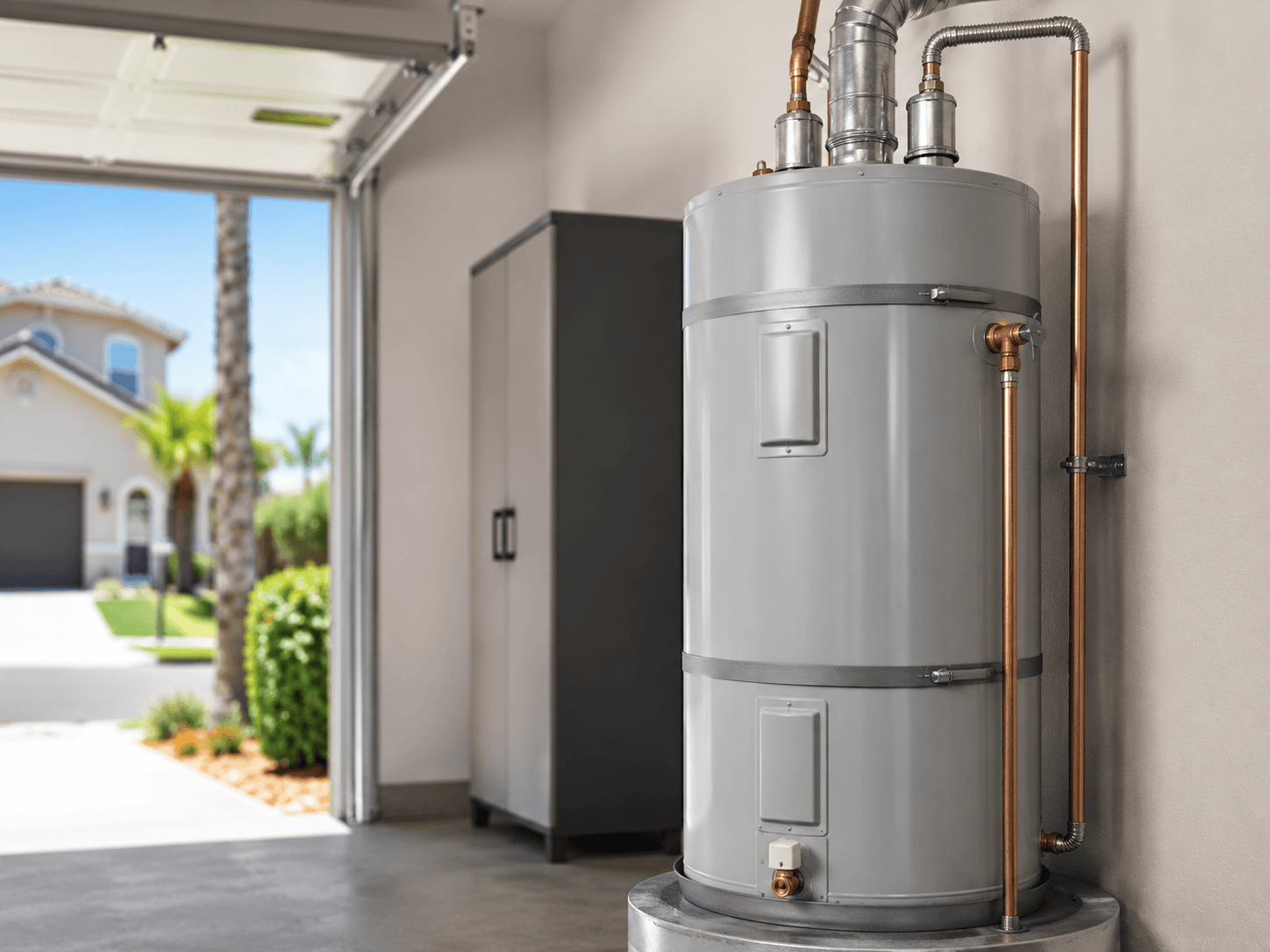
A tank water heater costs less up front and is usually a direct swap, while a tankless heater costs more to install but uses less energy and lasts longer. National cost guides put a tank replacement at about $880 to $1,830 and a tankless install at about $1,400 to $3,900 (approximate), before any gas line or venting upgrades. The U.S. Department of Energy estimates 10-15 years for tanks and 20+ years for tankless.
Your First Call Clears It All.
Talk to a real person now and get a licensed plumber or restoration crew dispatched across the Inland Empire - day or night.