Quick answer
Common signs of a slab leak include a water bill that rises without more use, warm spots on the floor, the sound of running water when everything is off, damp flooring, and a musty smell near the floor. To check, turn off all water and see whether your meter reading changes over two hours.
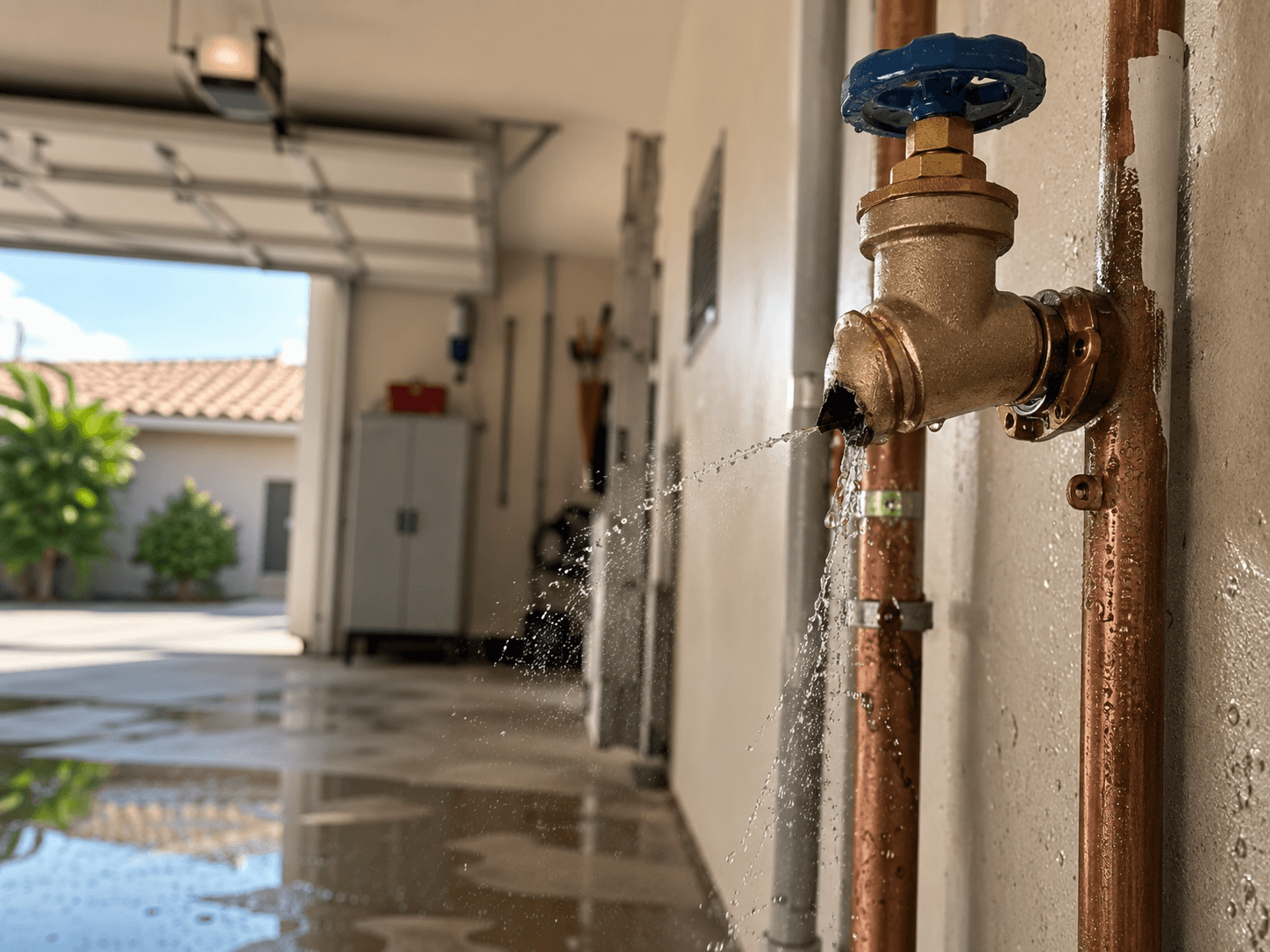
Many Southern California homes are built on a concrete slab, with water lines running underneath or through it. When one of those pipes leaks, the water has nowhere obvious to go. It soaks into the soil and the slab, and it can run for weeks before you see a puddle.
That's what makes a slab leak tricky: the first clues are usually indirect. This guide covers the most common warning signs, a simple water meter test you can do yourself, why slab homes in our area get these leaks, and the main ways to fix one.
8 common signs of a slab leak
One of these signs on its own doesn't prove you have a slab leak. Two or three together are a strong reason to check.
1. A water bill that jumps for no reason
If your usage hasn't changed but your bill has gone up, water is going somewhere. A pressurized supply line leaks around the clock, so even a small leak adds up over a billing cycle. Compare the usage numbers on your bill to the same months last year, not just the dollar amount.
2. Warm or hot spots on the floor
A leak in a hot water line under the slab can warm the floor above it. You may notice it barefoot on tile, or see pets choosing to lie in one spot. A warm spot usually points to the hot side of the plumbing.
3. The sound of running water when nothing is on
With every faucet, toilet, and appliance off, listen near the floor in a quiet house, especially at night. A faint hiss or rushing sound can be water escaping a pressurized line.
4. A water heater that runs constantly
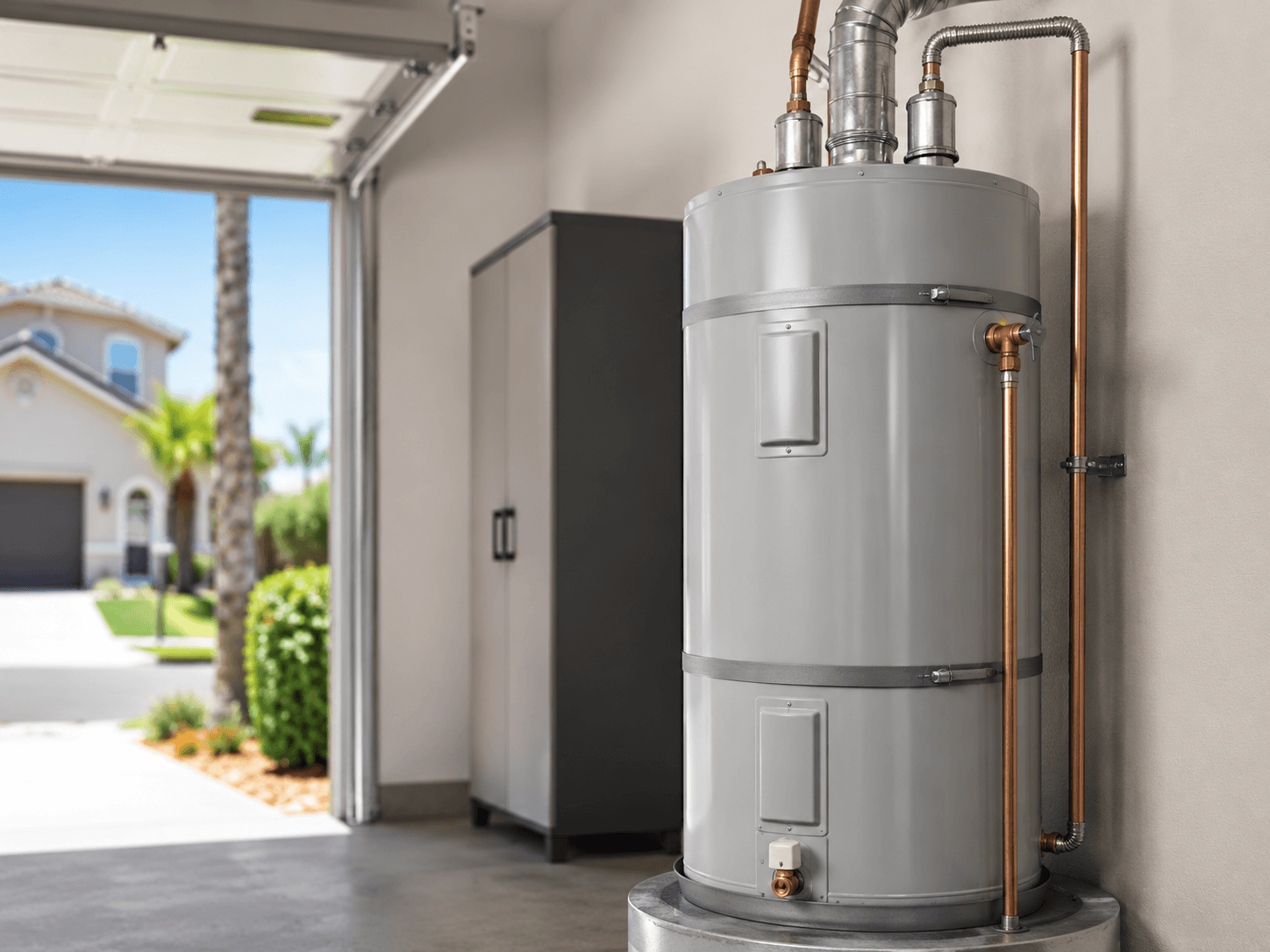
If a hot water line is leaking, the water heater keeps refilling and reheating. You might hear it firing more often or notice higher gas or electric bills along with the water bill.
5. Damp carpet, warped wood, or loose tiles
Water pushed up through the slab can show up as damp or stained carpet, cupped or buckling wood or laminate, or tiles that sound hollow or start to lift. Baseboards may swell or stain along the bottom.
6. Mildew smell or mold near the floor
A musty odor in one area, or mold at the base of walls, means something is staying damp. Mold can start growing on wet materials within 24-48 hours, so a hidden leak is a common cause. See how fast mold grows after water damage.
7. New or growing cracks
Cracks in flooring, tile, or walls have many causes, and most aren't leaks. But new cracks that show up along with other signs on this list are worth checking, since water under a slab can affect the soil it sits on.
8. Low water pressure
A sudden drop in pressure, especially on one side of the house or on the hot side only, can mean water is escaping before it reaches your fixtures.
Try the water meter test
Your water meter is the simplest way to tell whether water is leaving your system when it shouldn't. The EPA's WaterSense program recommends checking the meter before and after a two-hour period when no water is used. Here's how:
- Turn off all water use inside and outside: faucets, toilets, the washer, dishwasher, ice maker, and sprinklers. Make sure no one uses water during the test.
- Find your meter. It's usually in a box near the street or sidewalk. Lift the lid carefully.
- Look at the leak indicator. Many meters have a small triangle, star, or dial that spins when any water flows. If it's moving with everything off, water is flowing somewhere.
- Write down the reading on the meter.
- Wait two hours without using any water, then read the meter again. If the number changed, you probably have a leak.
- Narrow it down. Shut off the main valve at the house and check the indicator again. If it stops, the leak is inside the home's plumbing (which includes lines under the slab). If it keeps moving, the leak may be in the service line between the meter and the house, or in an irrigation line.
Why Southern California slab homes get leaks
Slab leaks can happen anywhere, but a few local factors make them a familiar problem in the Inland Empire:
- Slab-on-grade construction. Many homes in the region are built on concrete slabs with water lines below the floor instead of in a crawl space.
- Aging copper lines. In older homes, copper pipe under the slab has been in place for decades. Over time it can wear thin and develop pinhole leaks.
- Pipe movement and abrasion. Pipes expand and contract as hot and cold water moves through them. Where a pipe rubs against concrete, gravel, or another pipe, that motion can wear through it over time.
- Water chemistry. Mineral content and water chemistry can contribute to corrosion and pinhole leaks in copper. Hard water is common in our area - see our guide on hard water in the Inland Empire.
- Soil movement. Settling and shifting soil can put stress on pipes encased in or under concrete.
- High water pressure. Pressure that runs too high puts extra strain on every pipe and joint in the system.
How slab leaks are found
Good slab leak detection finds the leak's location before anyone breaks concrete. A plumber will usually:
- Pressure test the hot and cold lines separately to confirm which side is leaking.
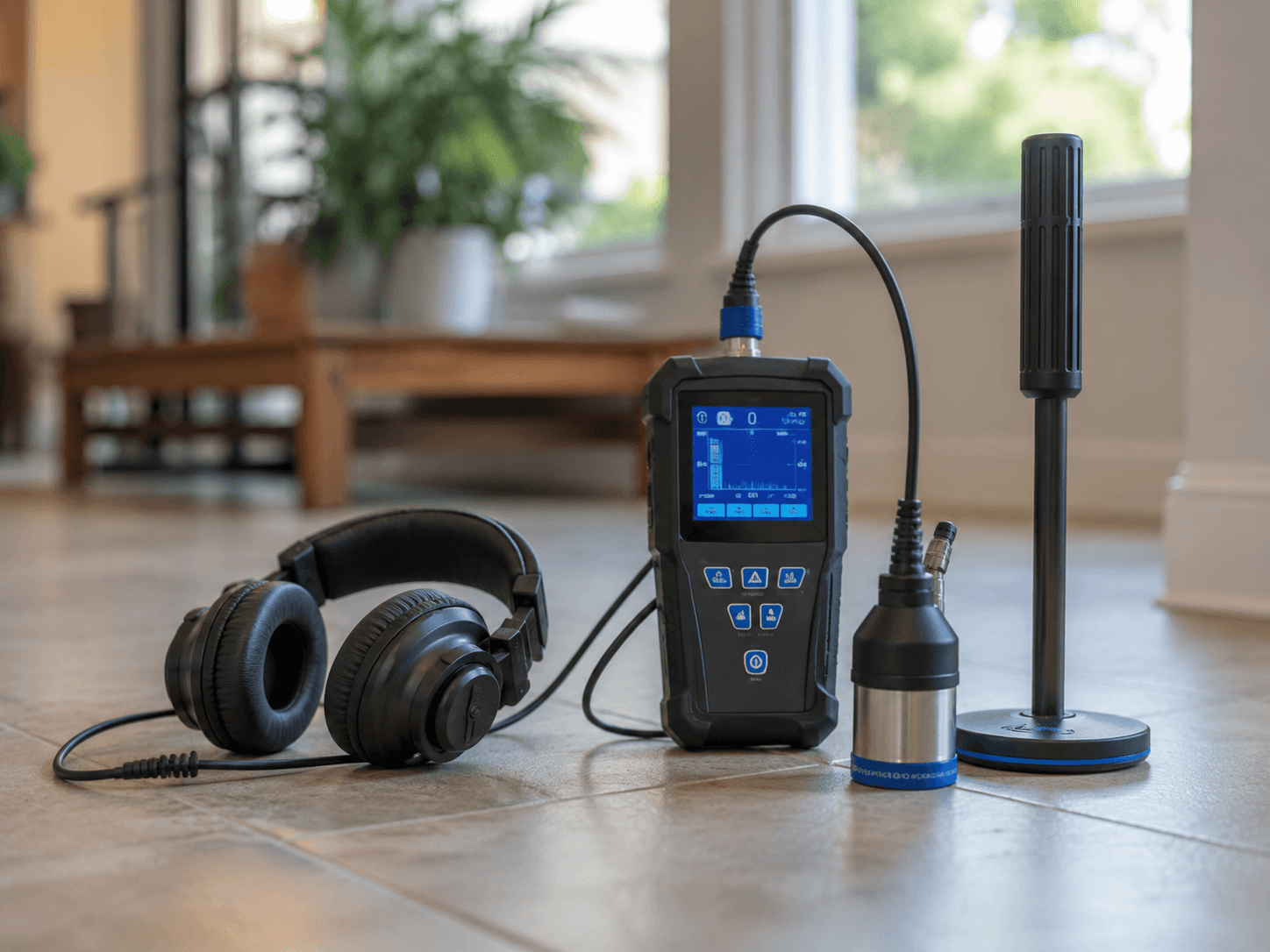
- Listen with acoustic equipment that picks up the sound of escaping water through the slab.
- Use electronic and thermal tools to trace the line and spot temperature differences from hot water leaks.
- Mark the most likely spot so any repair opening is as small as possible.
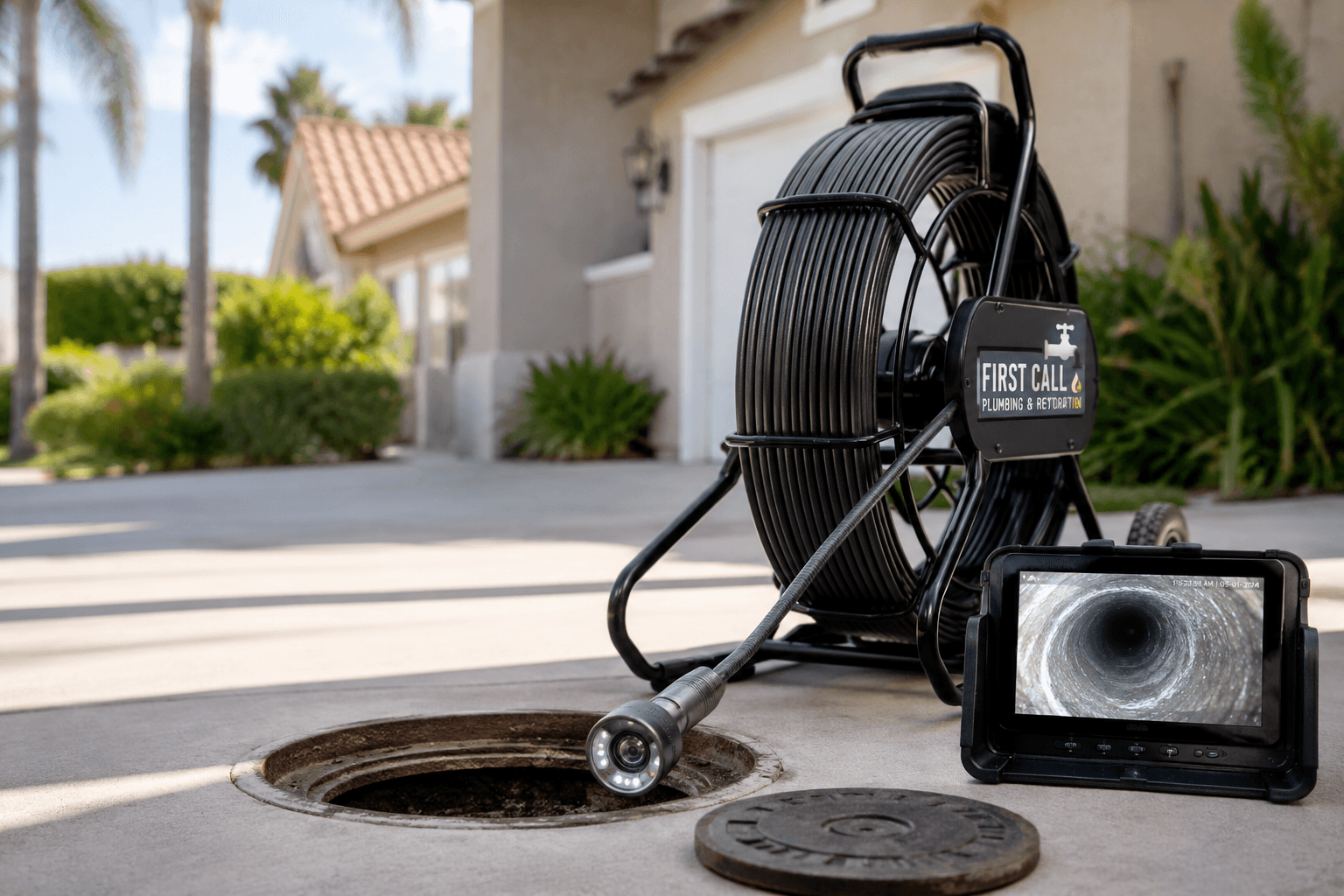
Not every slab leak is a supply line. Drain and sewer lines under the slab can crack or separate too, and those don't show up on the water meter. They're found with a sewer camera. We include a free HD camera inspection with any service.
Repair options: spot repair, reroute, or repipe
Once the leak is found, there are three main ways to fix it. The right choice depends on where the leak is, the condition of the rest of the piping, and how many leaks you've had.
| Option | What it involves | Often a good fit when |
|---|---|---|
| Spot repair | Open the floor and slab at the leak, repair the damaged section, then patch the concrete and flooring. | It's a single leak, the pipes are otherwise in good shape, and the spot is reasonably easy to reach. |
| Reroute | Leave the leaking line in place, cap it, and run a new line through the walls, attic, or around the slab. | The leak is under a hard-to-reach area or expensive flooring, or the line under the slab is aging. |
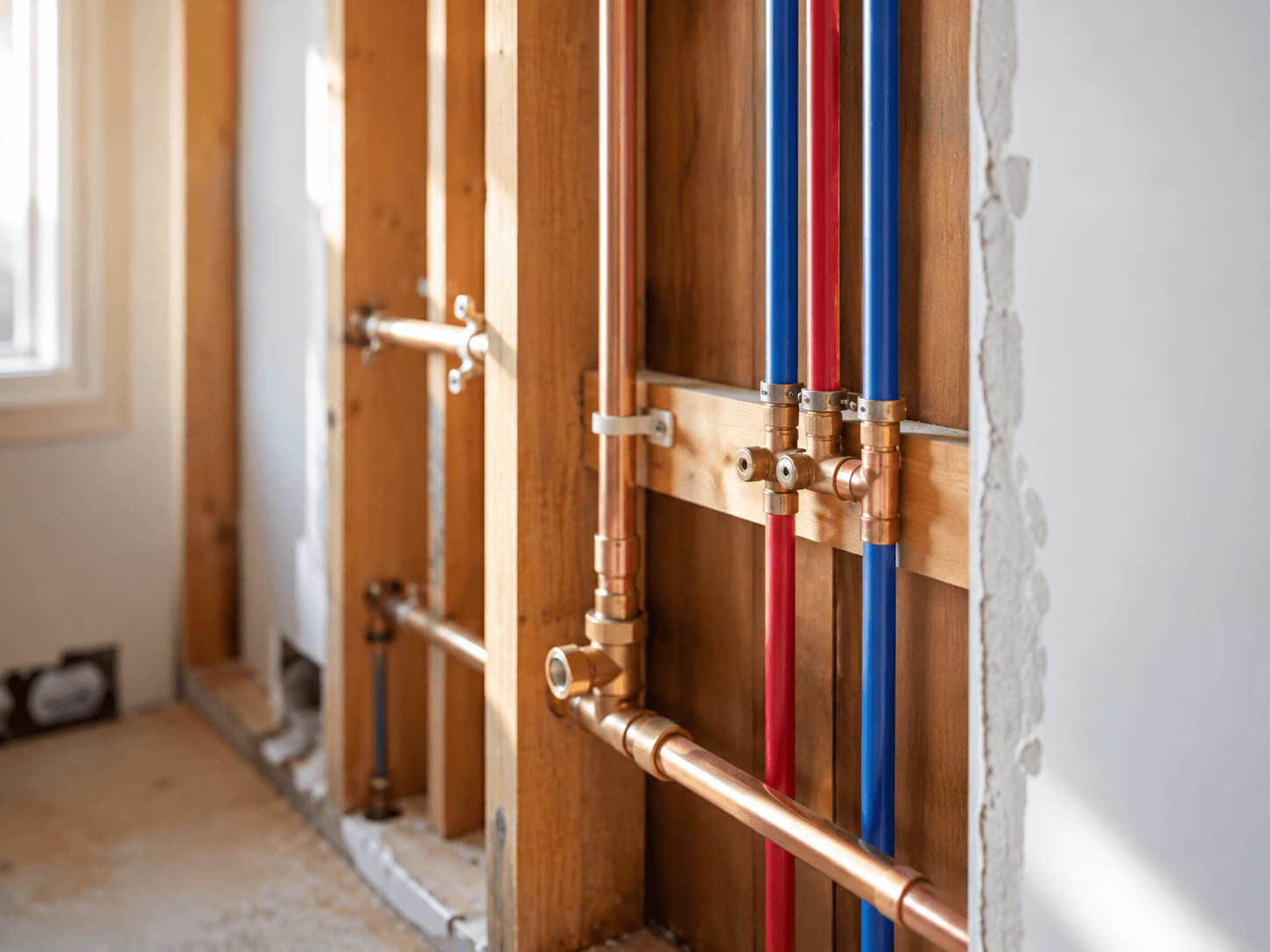
| Repipe | Replace the home's water lines, partly or fully, with new copper or PEX, usually run overhead. | You've had more than one leak, the pipes are old or corroded, or you also have low pressure or discolored water. |
A spot repair can be the least expensive fix, but if your pipes are aging, another leak may follow somewhere else under the slab. That's why many homeowners with older copper lines choose a reroute or a whole-home or partial repipe after a second leak.
What does slab leak repair cost?
National cost guides give a rough idea. HomeAdvisor, for example, reports leak detection typically around $150 to $400 and an average slab leak repair of about $2,280, with most jobs between roughly $630 and $4,400. These are national averages. Your cost depends on the repair method, how much flooring and concrete must be opened, and any water damage that needs drying and rebuilding. Repiping is a larger project priced by the home. We find the leak first and give you an up-front quote for the repair options before any work starts.
Don't wait on a slab leak
A leak under the slab doesn't fix itself. The longer it runs, the more water you pay for and the more chance of wet flooring, damaged baseboards, mold, and soil problems under the foundation. If you've confirmed a leak with the meter test, shut off the main valve when you're not using water, and get it located.
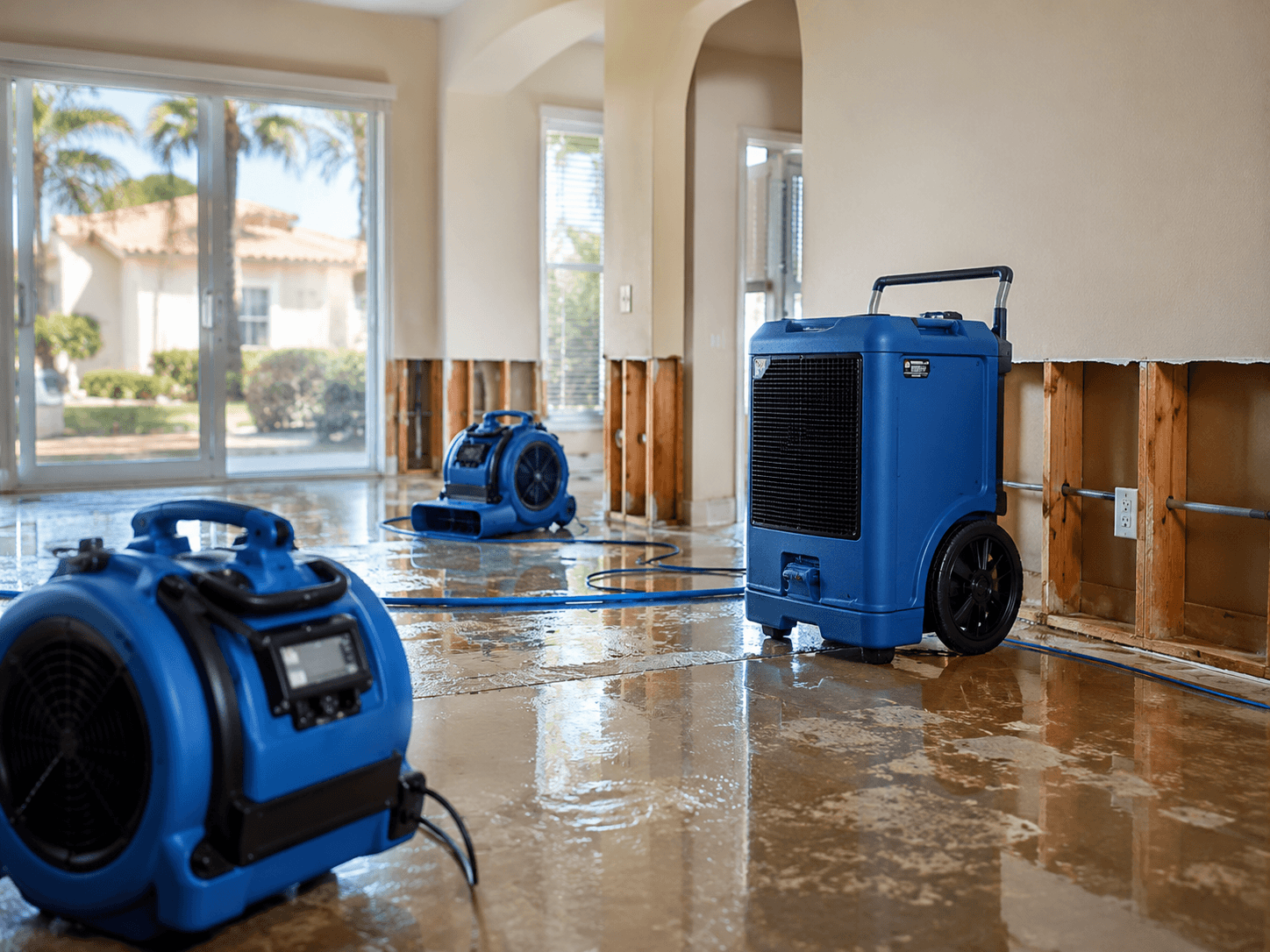
If water has already soaked flooring or walls, we can handle the drying and water damage restoration too, and document the damage with photos, moisture readings, and a written scope for your insurance adjuster. Policies vary on what they cover for slab leaks, and the coverage decision is up to your insurer.
Think you have a slab leak? First Call Plumbing & Restoration serves Riverside and San Bernardino counties, plus Yorba Linda, Brea, and Placentia. We're open 24/7 - call (909) 751-2323 or contact us online to schedule leak detection.
Frequently asked questions
How do I know if I have a slab leak?+
Common signs include a water bill that rises without more use, warm spots on the floor, the sound of running water when everything is off, damp flooring, and a musty smell near the floor. The best quick check is a water meter test: turn off all water and see whether the leak indicator moves or the reading changes over two hours.
Is a slab leak an emergency?+
It's urgent, even if it isn't always an emergency. A slab leak keeps running until it's fixed, wasting water and soaking the slab and flooring. If you see water coming up through the floor or the leak is large, shut off the main valve and call a plumber right away.
Do you have to break the slab to fix a slab leak?+
Not always. Accurate leak detection keeps any opening small if a spot repair is the best option. In many cases the line can be rerouted through the walls or attic instead, which avoids breaking concrete at all.
Should I repair or repipe after a slab leak?+
If it's your first leak and the pipes are in good condition, a spot repair or reroute is often enough. If you've had more than one leak or have older copper or galvanized pipe, repiping can end the cycle of repeat leaks. We'll explain the options and quote each one up front.
Does homeowners insurance cover slab leaks?+
It depends on your policy. Some policies cover water damage and the cost to access the pipe but not the pipe repair itself. We document the damage and can work with your adjuster, but the coverage decision is between you and your insurer.
This guide is general information, not a quote or professional advice for your specific home or insurance policy. Prices are approximate - we give an up-front quote before any work begins.