Quick answer
Most Inland Empire homes get hard water - Riverside Public Utilities' 2025 report lists an average of 197 mg/L, about 12 grains per gallon, which is very hard. Find your number in your provider's water quality report, check local softener rules, then choose a softener for scale, carbon filtration for taste, or reverse osmosis for drinking water.
If you live in Riverside or San Bernardino County, you've probably seen it: white crust on faucets, spots on glasses, and a showerhead that sprays sideways. That's hard water, and it's the norm across most of the Inland Empire.
Hard water isn't a health problem. It's a maintenance problem. This guide explains why our water is hard, how to look up your own number, what hardness does to your plumbing and water heater, and how the main treatment options compare - including the salt softener rules that apply in some local cities.
What "hard water" means
Hard water is water with a lot of dissolved calcium and magnesium. These minerals are picked up as water moves through rock and soil. They don't hurt you, but when water is heated or evaporates, they come out as a chalky white scale.
Water utilities usually report hardness in milligrams per liter (mg/L), which is the same as parts per million. Water treatment equipment is usually sized in grains per gallon (gpg). To convert, divide mg/L by 17.1. For example, 197 mg/L is about 11.5 grains per gallon, which most reports round to 12.
| Hardness level (USGS scale) | mg/L (as calcium carbonate) | Grains per gallon (approx.) |
|---|---|---|
| Soft | 0 - 60 | 0 - 3.5 |
| Moderately hard | 61 - 120 | 3.5 - 7 |
| Hard | 121 - 180 | 7 - 10.5 |
| Very hard | Over 180 | Over 10.5 |
Why Inland Empire water is so hard
Inland Empire tap water comes from two main kinds of sources, and both tend to be hard:
- Local groundwater. Many cities pump water from underground basins. Groundwater sits in contact with rock and sediment for a long time and picks up minerals along the way. Riverside Public Utilities, for example, met all of its 2025 demand with groundwater from the Bunker Hill and Riverside basins.
- Imported Colorado River water. The Metropolitan Water District of Southern California (MWD) brings in water from the Colorado River and from Northern California through the State Water Project. Colorado River water is much harder than State Water Project water, so areas that get more Colorado River water usually have harder water.
This is why hardness can change from one neighborhood to the next, and even month to month, depending on which source your utility is using and how it's blended.
How hard is the water? A few local examples
These numbers come from published annual water quality reports (also called Consumer Confidence Reports). They are averages, and your home may differ.
| Source (report) | Average hardness | About gpg |
|---|---|---|
| Riverside Public Utilities (2025 report) | 197 mg/L (range 180 - 210) | 12 |
| MWD Skinner plant - Colorado River and State Water Project blend, serves western Riverside County (2025 report, 2024 data) | 242 mg/L | 14 |
| MWD Mills plant - State Water Project water, serves western Riverside County and Moreno Valley (2025 report, 2024 data) | 84 mg/L | 5 |
Eastern Municipal Water District's 2025 report shows how much this can vary inside one district: across its different supply sources, hardness ranged from about 4 to 19 grains per gallon, and water from the Skinner plant averaged about 13 grains per gallon.
Signs you have hard water
- White or chalky crust on faucets, showerheads, and around drains
- Spots and film on dishes and glasses after the dishwasher
- Soap and shampoo that don't lather well, and soap scum on tubs and shower glass
- Showerheads and faucet aerators that clog or spray unevenly
- Rumbling or popping sounds from a tank water heater
- Scale buildup inside kettles, coffee makers, and ice makers
What hard water does to your water heater and fixtures
Tank water heaters
When hard water is heated, minerals settle to the bottom of the tank as sediment. That layer sits between the burner and the water, so the heater has to work harder. It's also what causes the popping or rumbling sound. Flushing the tank on a regular schedule helps, but in very hard water the sediment comes back.
Tankless water heaters
Tankless units heat water as it passes through a small heat exchanger. Scale builds up inside those narrow passages, which can reduce hot water flow and trigger error codes. Manufacturers such as Navien recommend descaling at least once a year, and more often with hard water. If you're weighing a new unit, see our guide on tankless vs tank water heaters.
Faucets, valves, and appliances
Scale wears on cartridges and valves, clogs aerators, and builds up in dishwashers, washing machines, and ice makers. It's the main reason faucet cartridges and toilet fill valves need replacing sooner in hard water areas.
Your options: softener, filtration, or reverse osmosis
These systems do different jobs. Many homes use more than one - for example, a whole-home system for the plumbing plus reverse osmosis at the kitchen sink for drinking water.
| Option | What it does | Removes hardness? | Good to know |
|---|---|---|---|
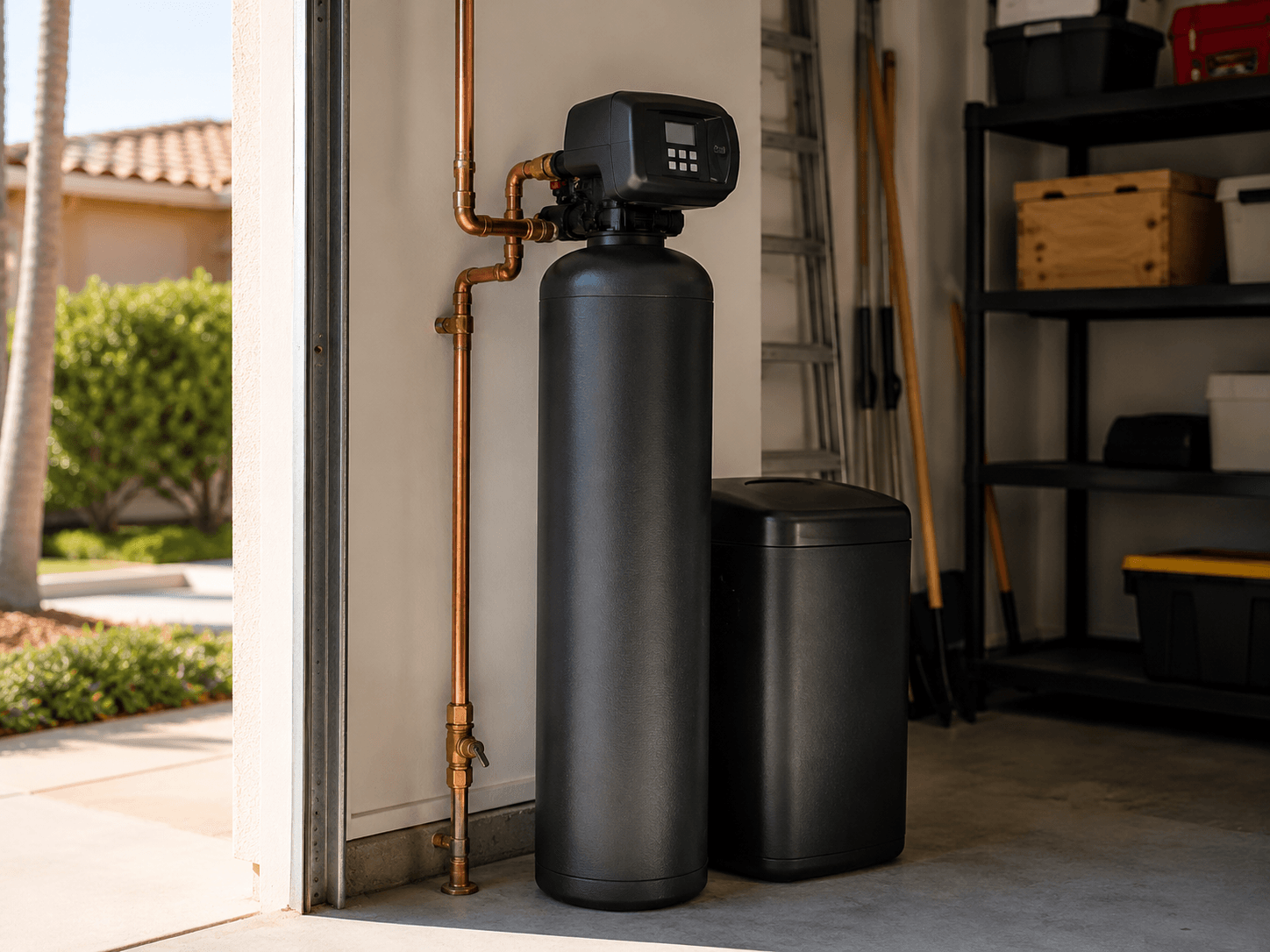
| Salt-based water softener (ion exchange) | Swaps calcium and magnesium for sodium or potassium | Yes, whole house | Most effective against scale. Self-regenerating models are restricted in some local cities (see below). |
| Exchange-tank softener service | Same ion exchange, but a company swaps out the tanks and regenerates them off site | Yes, whole house | No brine goes down your drain at home. Often the option where self-regenerating units aren't allowed. |
| Salt-free conditioner | Changes how minerals behave so they're less likely to stick as scale | No - minerals stay in the water | No salt or drain line. Results vary, and it won't stop spots on glass the way a softener does. |
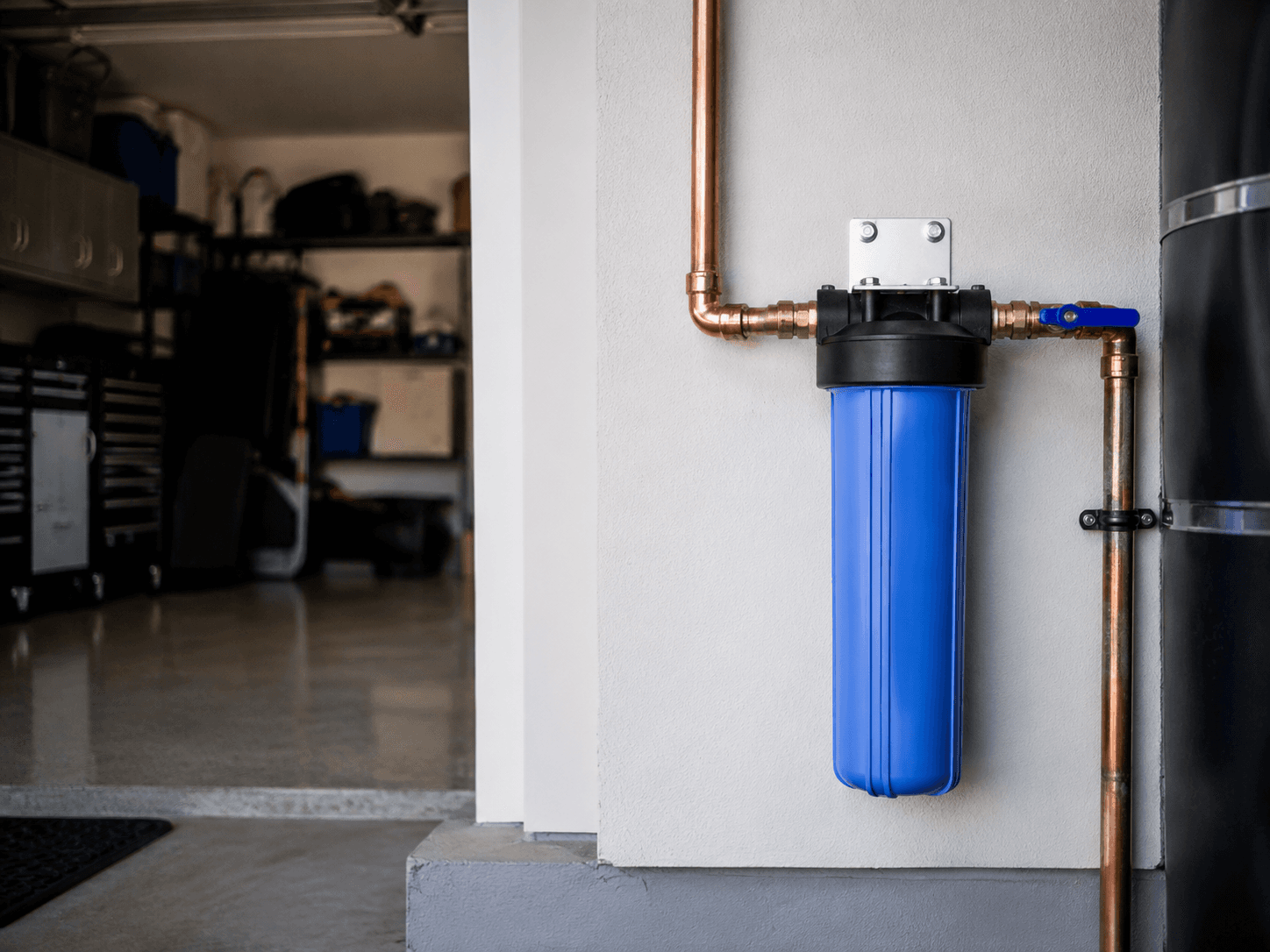
| Whole-home filtration (carbon) | Reduces chlorine or chloramine taste and odor, and some other contaminants | No | Improves taste and smell at every tap. Often paired with a softener. |
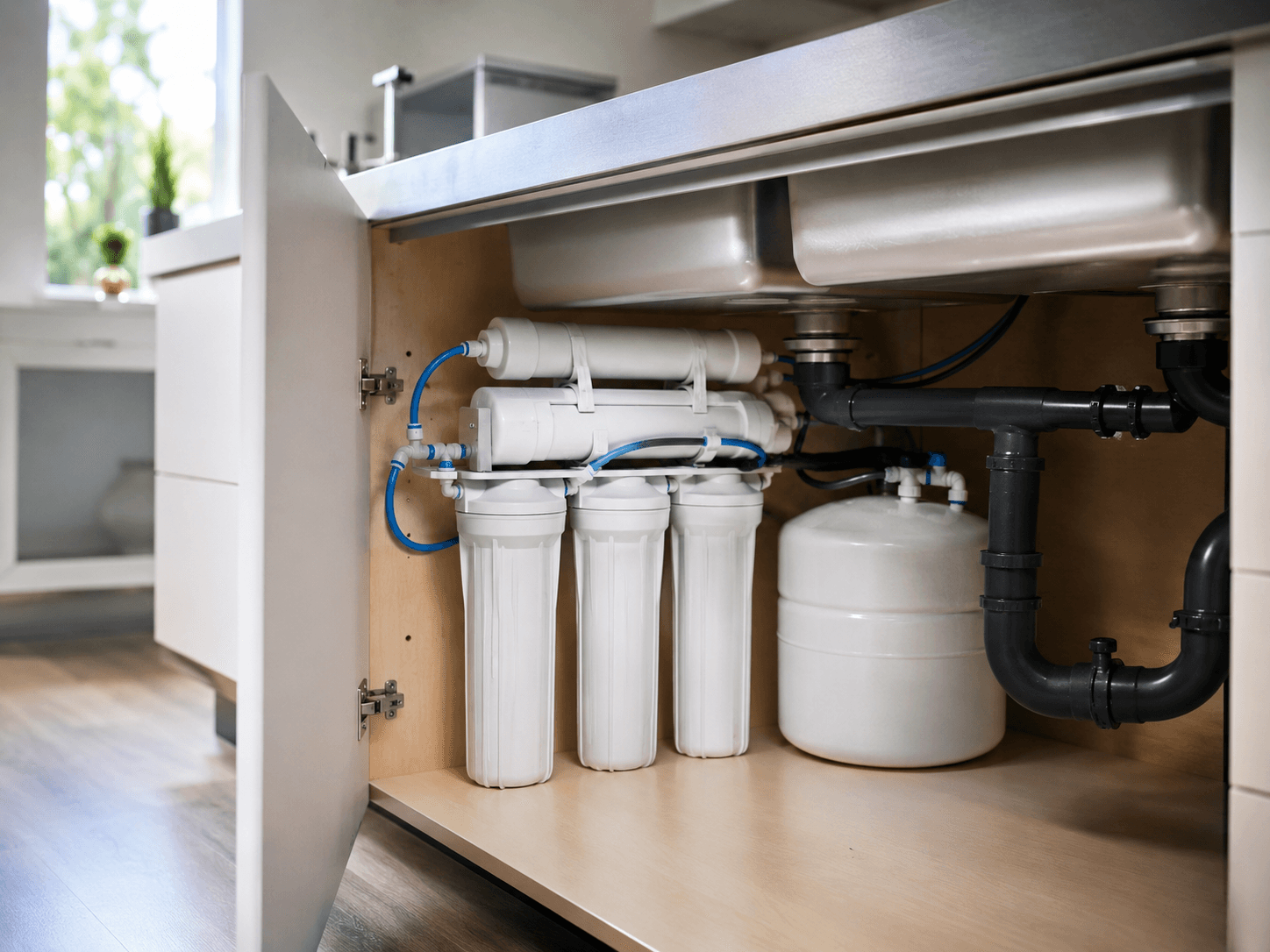
| Reverse osmosis (RO) | Forces water through a fine membrane to remove most dissolved minerals and many contaminants | Yes, at one tap | Usually installed under the kitchen sink for drinking and cooking water. |
A softener is sized by your hardness in grains per gallon, your household size, and your water use. Softened water contains some added sodium. If someone in your home is watching their sodium, potassium chloride can be used instead of salt, or you can drink reverse osmosis water.
California salt softener rules: check your district
Salt-based softeners that regenerate at your house flush salty brine into the sewer. Wastewater plants can't easily remove that salt, and it ends up in recycled water and groundwater. Because of this, California Water Code section 13148 lets certain local sewer and recycled-water agencies control residential self-regenerating water softeners. Depending on the agency, that can mean efficiency standards, permits, limits on new installs, or an outright ban on new units.
In the Inland Empire, the clearest example is the Inland Empire Utilities Agency (IEUA). Its regional ordinance prohibits the new installation or replacement of self-regenerating water softeners in its service area, which covers Chino, Chino Hills, Fontana, Montclair, Ontario, Rancho Cucamonga, and Upland. According to IEUA:
- You can keep an existing self-regenerating softener, but you can't replace it or install a new one.
- Exchange-tank softener service is an acceptable alternative.
- IEUA runs a removal rebate program for working self-regenerating units. Check IEUA's website for current amounts and terms.
Other agencies may have their own rules, and rules can change. Before you buy a softener, call your city or sewer agency, or ask us - we'll tell you what's allowed at your address before recommending anything.
How to choose
- Get your hardness number from your water quality report, or have your water tested at the tap.
- Decide what bothers you most. Scale and spots point to a softener. Taste and odor point to carbon filtration. Drinking water quality points to RO.
- Check your local softener rules before choosing a salt-based system.
- Think about your water heater. If it's a tankless unit or you plan to switch, reducing scale protects your investment.
- Plan for upkeep. Softeners need salt or tank swaps, filters need cartridge changes, and RO membranes and filters need replacing on a schedule.
How we can help
We install and service water softeners, whole-home filtration, and reverse osmosis systems across Riverside and San Bernardino counties, from Riverside and Rancho Cucamonga to Temecula and Redlands. We'll look at your hardness, your plumbing, and your local rules, then give you an up-front quote before any work starts.
Have questions about hard water at your home? Call First Call Plumbing & Restoration at (909) 751-2323 - we're open 24/7 - or contact us online to schedule a visit.
Frequently asked questions
Is hard water safe to drink?+
Yes. Calcium and magnesium are not considered a health concern, and there is no federal health-based limit for hardness. Hard water is mainly a nuisance that causes scale, spots, and extra wear on fixtures and water heaters.
How hard is the water in Riverside?+
Riverside Public Utilities' 2025 water quality report lists an average hardness of 197 mg/L, or about 12 grains per gallon, which is considered very hard. If you're served by a different provider, check that provider's annual water quality report, since hardness varies by source.
Are water softeners banned in the Inland Empire?+
Not everywhere. The Inland Empire Utilities Agency prohibits new or replacement self-regenerating (salt-discharging) softeners in Chino, Chino Hills, Fontana, Montclair, Ontario, Rancho Cucamonga, and Upland, while allowing existing units to stay and exchange-tank service. Other areas may have different rules, so check with your city or sewer agency before installing one.
Will a reverse osmosis system soften my whole house?+
Usually not. Most RO systems are installed under the kitchen sink and treat water for drinking and cooking only. To reduce scale throughout the house, you'd typically need a whole-home softener or exchange-tank service.
What size water softener do I need?+
Softeners are sized by your water hardness in grains per gallon, the number of people in your home, and how much water you use. A plumber can measure your hardness and recommend a size so the system isn't regenerating too often or running out of capacity.
This guide is general information, not a quote or professional advice for your specific home or insurance policy. Prices are approximate - we give an up-front quote before any work begins.