Quick answer
Tree roots in a sewer line usually show up as slow drains throughout the house, gurgling toilets, and backups that return after the line is cleared. Roots enter through cracks and loose joints, which are common in older clay pipe. Cutting or jetting clears them, but lining, spot repair, or replacement keeps them out.
If your main sewer line clogs, gets cleared, and then clogs again a few months later, tree roots are a likely suspect. Roots grow into small openings in the pipe, fill it with a mat of fine roots, and catch everything that flows past.
This guide covers the warning signs, why older Inland Empire neighborhoods see so many root problems, the ways roots are removed, the repairs that keep them out, and who is responsible for the pipe.
Signs of tree roots in your sewer line
Roots grow slowly, so the signs usually build over weeks or months rather than appearing overnight:
- Several drains slow down at the same time, not just one fixture.
- Gurgling toilets, especially when the washer drains or a tub empties.
- The lowest drain backs up first, often a tub, shower, or floor drain.
- Backups during heavy water use, like laundry day or a full house over the holidays.
- A clog that returns weeks or months after the main line was snaked.
- Sewer odor near the cleanout or somewhere in the yard.
- A soggy or extra-green patch of lawn along the path of the sewer line.
If sewage is already coming up into the house, stop using water and keep people and pets away from it. Our guide on what to do after a sewage backup walks through the first steps.
How roots get into a sewer pipe
Warm water flowing through a sewer line releases moisture into the cooler soil around it. Tree roots grow toward that moisture and follow it back to its source, which is usually a crack or a loose joint. Once a root tip finds an opening, it grows inside, where it has water and nutrients.
Roots need oxygen, so they grow in the open space above the water in a partly full pipe. Inside, they spread into a dense mat that catches paper, grease, and wipes. As they grow, they press on the joint or crack where they entered and can widen it. This can continue through winter, even when trees look dormant.
Why older Inland Empire neighborhoods get more root problems
Roots usually need an existing opening, and older pipe has more of them. Many established neighborhoods across the region pair mature trees with original sewer laterals:
- Clay pipe comes in short sections joined every few feet. Each joint is a place roots can enter, especially after decades of soil movement.
- Orangeburg pipe, made of wood fiber and tar, went into some homes from roughly the 1940s to the early 1970s. It softens and deforms with age, and roots can break it apart.
- Cast iron can crack or rust through, giving roots another way in.
- Mature trees have had generations to spread their roots in areas like Riverside's Wood Streets, the older central neighborhoods of San Bernardino, the streets around Euclid Avenue in Ontario, and the blocks near Grand Boulevard in Corona.
Newer homes with PVC or ABS sewer pipe see root problems far less often. It can still happen at a poorly sealed joint, a crack, or where new plastic pipe was tied into older pipe.
Confirm it with a camera
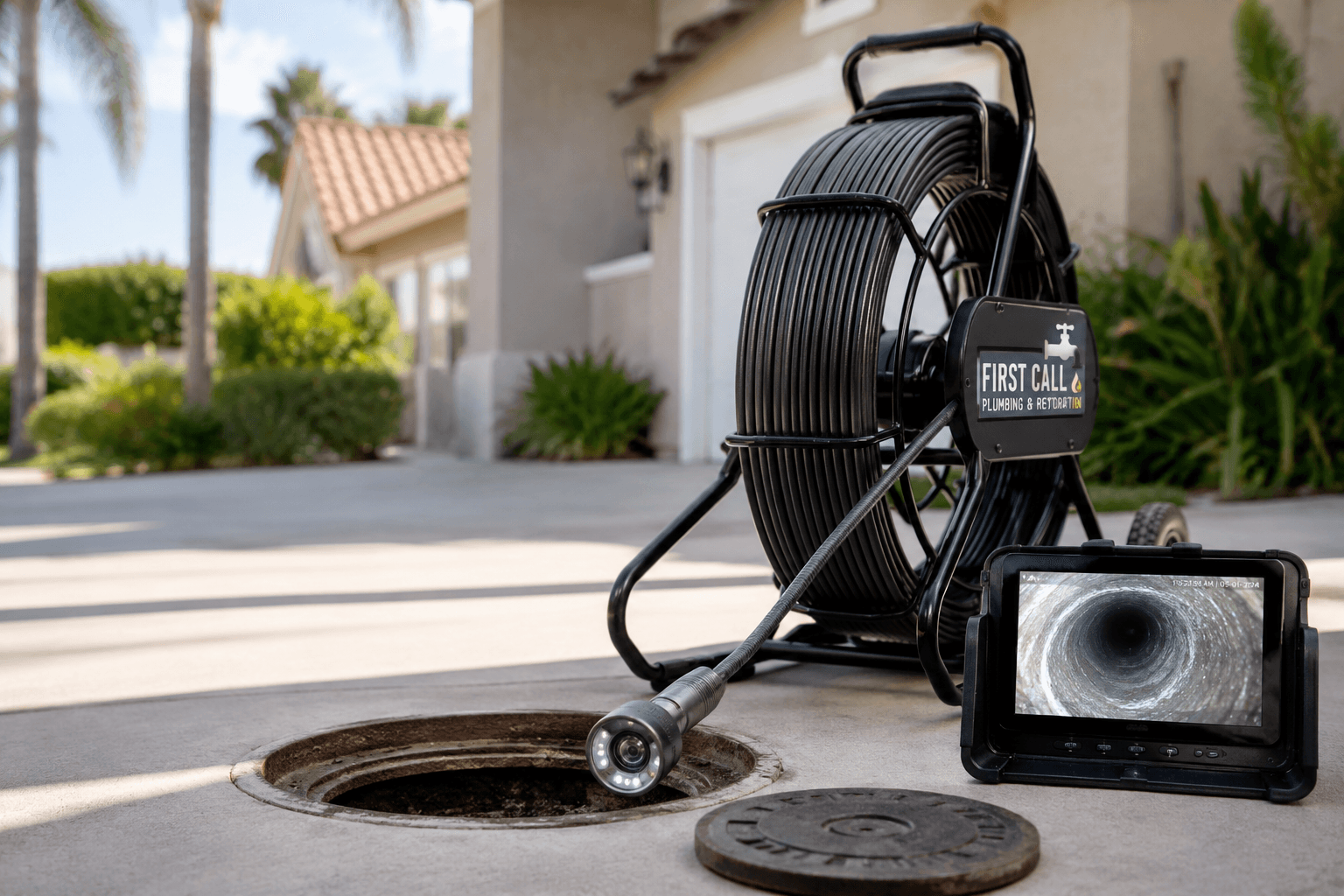
A sewer camera inspection shows whether roots are the cause, how many entry points there are, and how far each one is from the cleanout. A locator above ground can mark where each problem sits in the yard and roughly how deep. The camera also shows the pipe material and whether it's cracked, sagging, or collapsed, which decides whether cleaning is enough or the pipe needs repair.
Our current special includes $69 snaking of one problem drain line plus a FREE HD camera inspection of the main sewer line through an existing, accessible ground-level cleanout. We snake the drain line only, not the main sewer line, and homes without an accessible cleanout may need extra access, which is quoted separately. See our camera inspection page for details.
Removal options: clearing the roots
Mechanical cutting
A sewer machine with a root-cutting head spins through the line and cuts the roots back. It's fast and often restores flow right away. But it only trims the roots inside the pipe. Some sewer agencies compare it to pruning a hedge, which can encourage thicker regrowth.
Hydro jetting
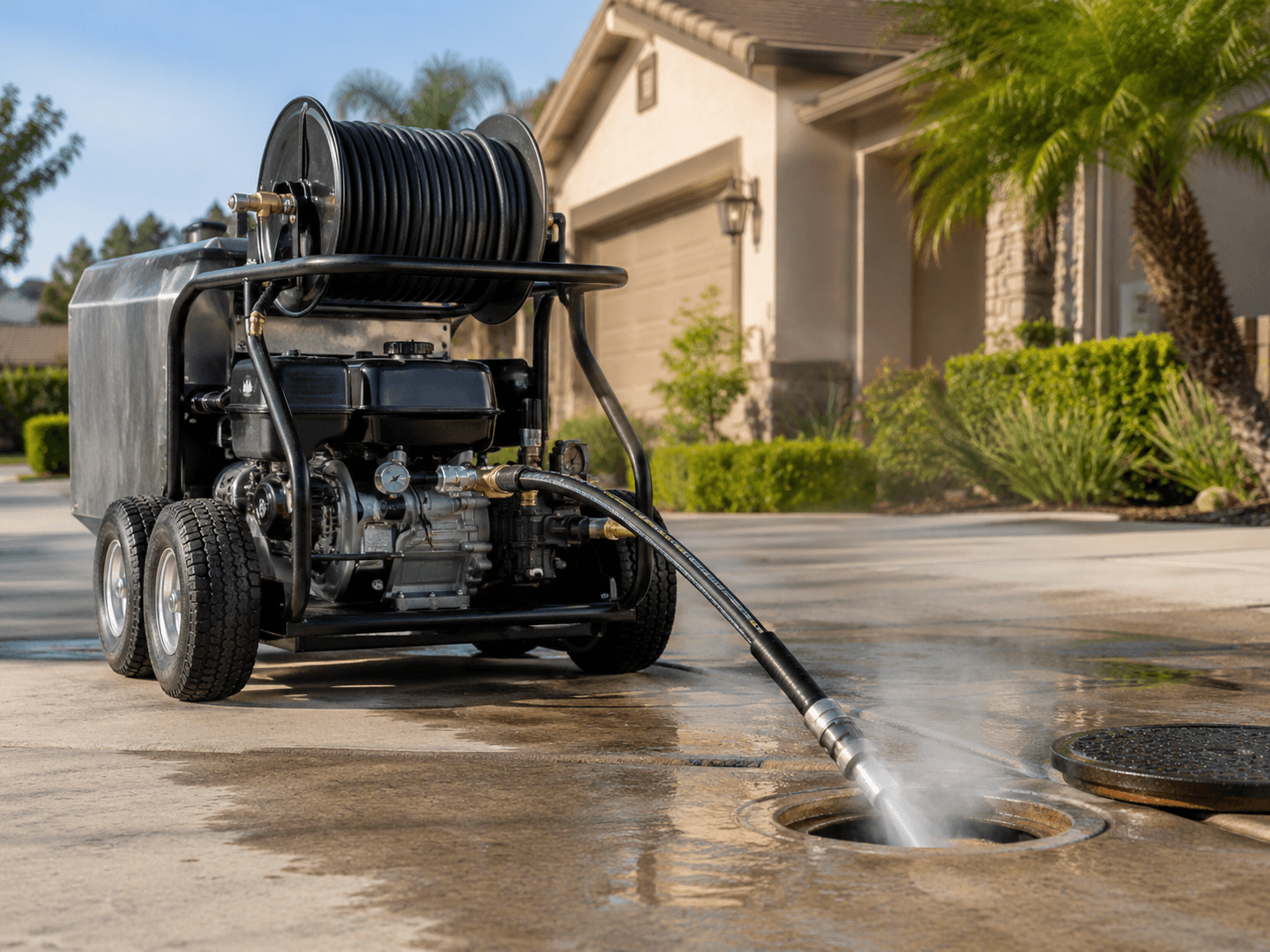
Hydro jetting with a root-cutting nozzle cuts roots and flushes them out, along with the grease and debris tangled in them. It cleans the full pipe wall, which makes it a good step before a camera check or a liner. On older clay or Orangeburg pipe, a camera should come first. Our guide to hydro jetting vs. snaking explains the difference in detail.
Chemical root treatments
Root control products are herbicides made to kill the roots inside the pipe. They can slow regrowth between cleanings, but it's worth knowing the facts:
- Foaming root treatments often contain dichlobenil, metam-sodium, or both. The foam fills the pipe so the herbicide reaches roots at the top of the line. Dichlobenil is used to slow root regrowth, and these products are designed to kill roots in the pipe without killing the tree.
- Metam-sodium sewer products have been restricted-use pesticides under EPA rules since 1996. Only certified applicators, or people under their direct supervision, may buy and apply them.
- Copper sulfate crystals are flushed into the line. Product labels warn that copper is toxic to fish and does not break down in the environment, and California prohibits copper sulfate for sewer root control in nine Bay Area counties.
Repair options that keep roots out
Clearing roots treats the symptom. To stop them for good, the openings have to be closed or the pipe replaced. The camera footage shows which option fits:
| Option | What it involves | Often a good fit when |
|---|---|---|
| Spot repair | Dig at the problem spot and replace the damaged section of pipe. | There's one entry point or broken section, and the rest of the line is sound. |
| Pipe lining (CIPP) | Clean the line, then install a resin-soaked liner that hardens into a seamless new pipe inside the old one, covering the joints roots used. | The old pipe still holds its shape, with roots at several joints. |
| Pipe bursting | Pull a new pipe through the old one while breaking the old pipe apart, using small access pits. | The line is too damaged to line but the path can be reused. |
| Full replacement by trench | Dig along the line and replace it with new pipe. | There's a severe sag, a collapse, or a layout that trenchless methods can't handle. |
Lining and pipe bursting are trenchless sewer repair methods, which save most of the yard, driveway, and landscaping. Many cities require a permit for sewer lateral repairs. The City of Fontana, for example, requires a permit to repair an existing sewer connection.
Who owns the sewer lateral?
In most Inland Empire cities, the homeowner is responsible for the sewer lateral, the pipe that runs from the house to the public sewer main. The city or sewer district maintains the main itself. The exact dividing point varies, so check with your agency before planning a repair.
Riverside is a good example of why it matters. According to the City of Riverside, the homeowner maintains the lateral and cleanout from the house to the property line. The City owns the lower lateral from the property line to the main, but only on laterals where a cleanout has been installed at the property line. If a licensed plumber finds the problem is in the City's section, the City asks you to call its 3-1-1 Call Center.
If the roots come from a city street tree, ask your city whether it has a policy for that situation. Rules differ from city to city.
How to keep roots from coming back
- Know where your sewer line runs. A camera with a locator can mark the path across the yard.
- Plant with the line in mind. The City of Riverside advises placing trees and shrubs a safe distance from sewer laterals. Ask a nursery or arborist about species and spacing.
- Schedule maintenance cleaning if roots are a known problem. Some owners clean about once a year, and a camera check shows how fast roots return.
- Consider a root treatment between cleanings, applied according to the label.
- Seal the entry points. Lining or repairing the pipe is the lasting fix when roots keep coming back.
- Watch what goes down the drain. Wipes, grease, and paper towels catch on roots and turn a partial blockage into a backup.
Get roots out of your sewer line
We clear roots, show you the camera footage, and give you up-front pricing on any repair before work begins. First Call Plumbing & Restoration is open 24/7 - call (909) 751-2323 or contact us to schedule.
Frequently asked questions
How do I know if tree roots are in my sewer line?+
Common signs are several slow drains at once, gurgling toilets, backups in the lowest drain, and clogs that return after the main line is cleared. A sewer camera inspection is the only way to confirm roots and see where they're getting in.
Will roots grow back after the sewer line is cleared?+
Usually, yes. Cutting or jetting removes the roots inside the pipe, but the crack or joint they came through is still open. Regular cleaning and root treatments can slow them down. Lining or repairing the pipe keeps them out.
Do root killers for sewer lines work?+
Root control products can kill roots inside the pipe and slow regrowth, but they don't repair the opening the roots came through. Some products, such as metam-sodium sewer treatments, can only be applied by certified applicators. Always follow the label.
Who pays to fix a sewer line damaged by tree roots?+
In most cities the homeowner is responsible for the sewer lateral from the house to the public main, but the dividing point varies. In Riverside, for example, the City owns the section from the property line to the main where a property-line cleanout exists. Check with your city or sewer agency.
Can a sewer line with roots be fixed without digging?+
Often, yes. If the pipe still holds its shape, a liner can be installed inside it to cover the joints roots used. Badly damaged lines may be replaced with pipe bursting through small access pits. A camera inspection shows which method fits.
This guide is general information, not a quote or professional advice for your specific home or insurance policy. Prices are approximate - we give an up-front quote before any work begins.