Quick answer
Snaking is best for a single, simple clog in a sink, tub, or toilet line, while hydro jetting is better for grease, scale, roots, and clogs that keep coming back because it cleans the whole pipe wall. In older homes with clay, cast iron, or Orangeburg pipe, a camera inspection should come before jetting.
When a drain backs up, most people just want it flowing again. But the way a plumber clears it matters. A drain snake and a hydro jetter both remove clogs, and they work in very different ways. Pick the wrong one and you may pay for the same clog twice.
This guide explains what each method does, when each one is the right call, why older pipes should be checked on camera before jetting, what affects the cost, and a few common myths.
What drain snaking does
A drain snake, also called a cable machine or auger, is a flexible steel cable with a cutting or grabbing head on the end. The plumber feeds it into the drain and spins it. The head breaks up the clog or hooks it so it can be pulled out.
Snaking is quick, and the cable fits through most fixture drains and cleanouts. It's the usual first tool for a single clogged sink, tub, shower, or toilet line.
The limit is that a snake opens a path through the clog about the size of its cutting head. Grease, soap scum, and mineral scale stuck to the pipe wall mostly stay behind. In a line coated with buildup, that's why the same clog can return within weeks.
What hydro jetting does
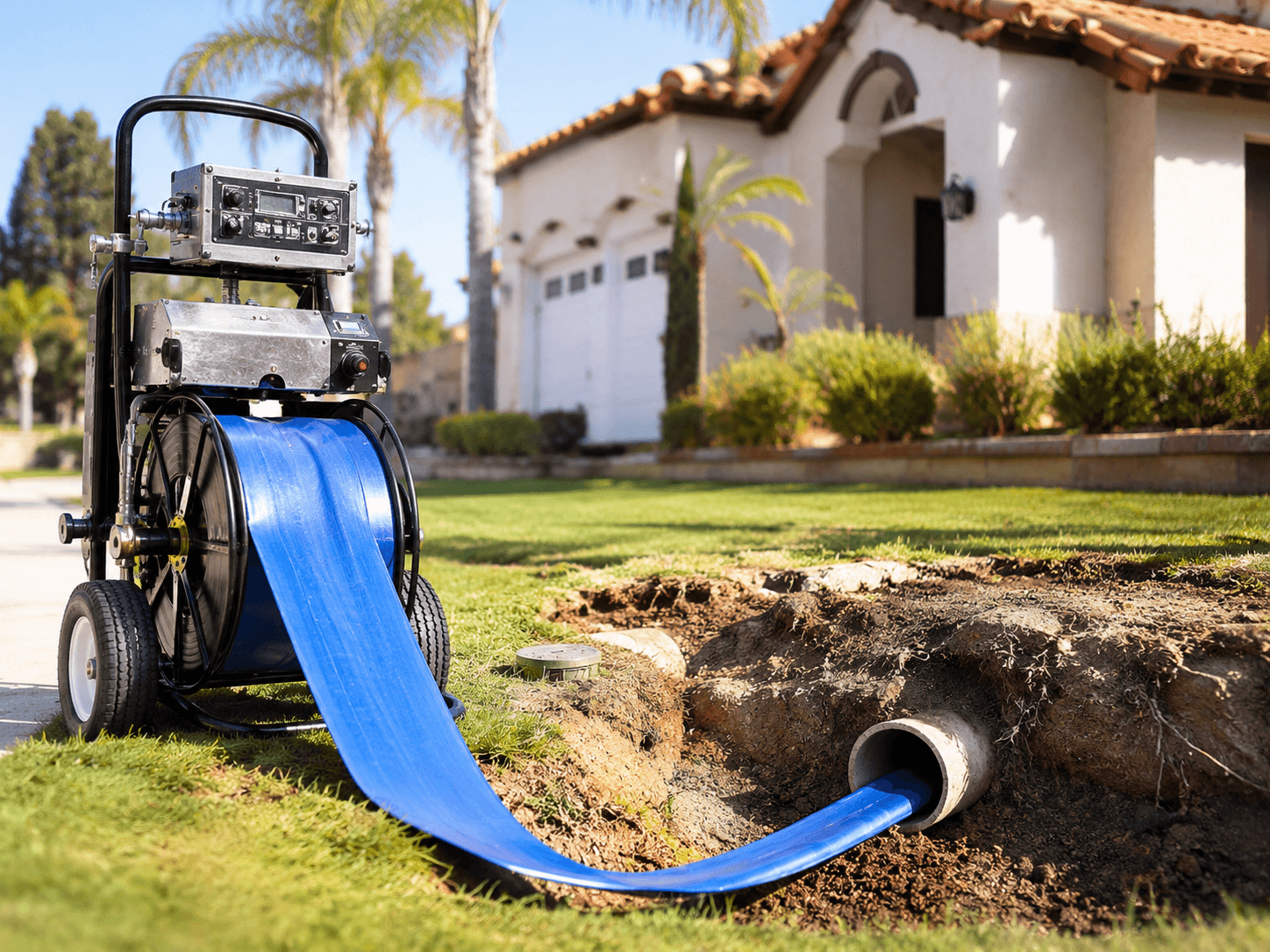
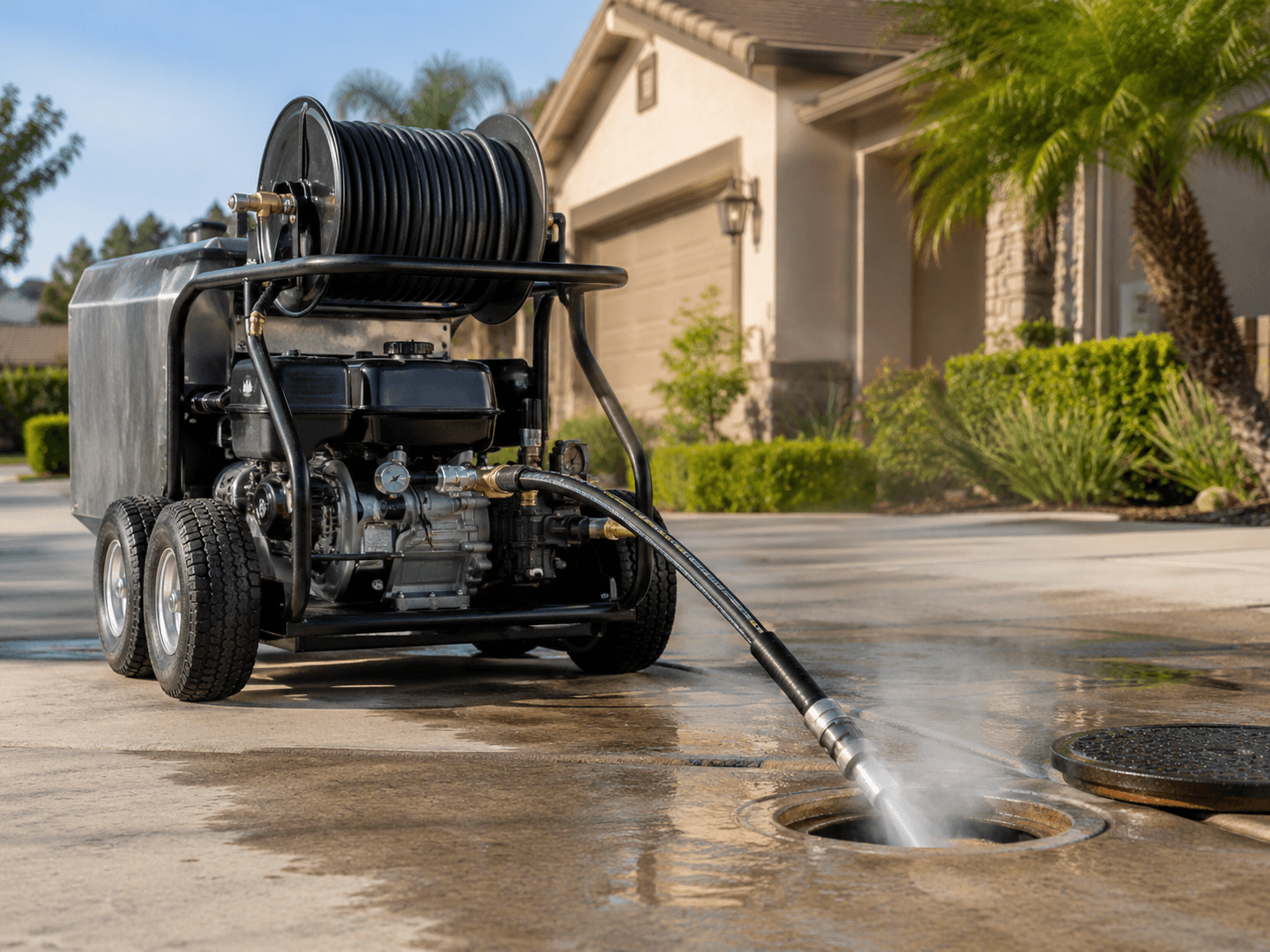
Hydro jetting uses a hose with a special nozzle that sprays water at high pressure, both forward and backward. The rear-facing jets push the hose up the line and scrub the pipe wall as it moves. The forward jets break through blockages ahead of it.
Instead of punching a hole through the clog, jetting washes grease, sludge, scale, and roots off the pipe walls and flushes the debris downstream. The pipe ends up much closer to its full width, so it usually stays clear longer. It uses water only, with no chemicals. The plumber picks the nozzle and pressure to match the pipe's size and condition.
Snaking vs. hydro jetting at a glance
| Compare | Drain snaking | Hydro jetting |
|---|---|---|
| How it works | A spinning cable breaks up or pulls out the clog | High-pressure water scours the pipe wall and flushes debris |
| Best for | One clogged fixture: sink, tub, shower, toilet | Grease, scale, roots, main lines, and repeat clogs |
| What it leaves behind | Buildup on the pipe walls | Very little - the pipe is cleaned close to full width |
| Roots | Cuts a path through them | Cuts and flushes roots out of the line |
| Older or damaged pipe | Lower risk, but can snag on broken sections | Needs a camera check first on clay, cast iron, and Orangeburg |
| Approximate national cost | About $150 to $350 per drain | About $350 to $600, with an average near $475 |
When snaking is the right call
- One fixture is slow or stopped and the rest of the house drains normally.
- The cause is simple, like hair in a tub drain or too much paper in a toilet.
- It's the first clog in a long time in that line, not a repeat problem.
- You need a fast, lower-cost fix to get a fixture working again.
When hydro jetting is the better choice
- Grease buildup in a kitchen line, especially one that has been snaked before.
- Mineral scale and soap scum narrowing older drains. Hard water is common across the Inland Empire, and the minerals bond with grease and soap.
- Roots in the main sewer line, where jetting with a root-cutting nozzle clears the full pipe instead of just a path.
- Repeat clogs in the same line every few weeks or months.
- Several drains backing up at once, which points to the main sewer line.
Our drain cleaning and hydro jetting service covers both methods, so the choice is based on the problem, not on which machine is on the truck.
Why a camera inspection should come first
Hydro jetting is safe for pipe in sound condition, including PVC and ABS plastic. The risk is jetting pipe that is already failing. Many established Inland Empire neighborhoods have homes from the mid-1900s, and their sewer lines often use materials that wear out:
- Clay pipe comes in short sections joined every few feet. Jetting usually works well on clay in fair shape, but high pressure can worsen joints that have already separated or cracked.
- Cast iron rusts and scales from the inside. Jetting can remove that scale, but cast iron that has corroded thin may not handle it.
- Orangeburg pipe, made of wood fiber and tar, was used in some homes from roughly the 1940s to the early 1970s. It can soften and deform with age, and aggressive cleaning can tear it.
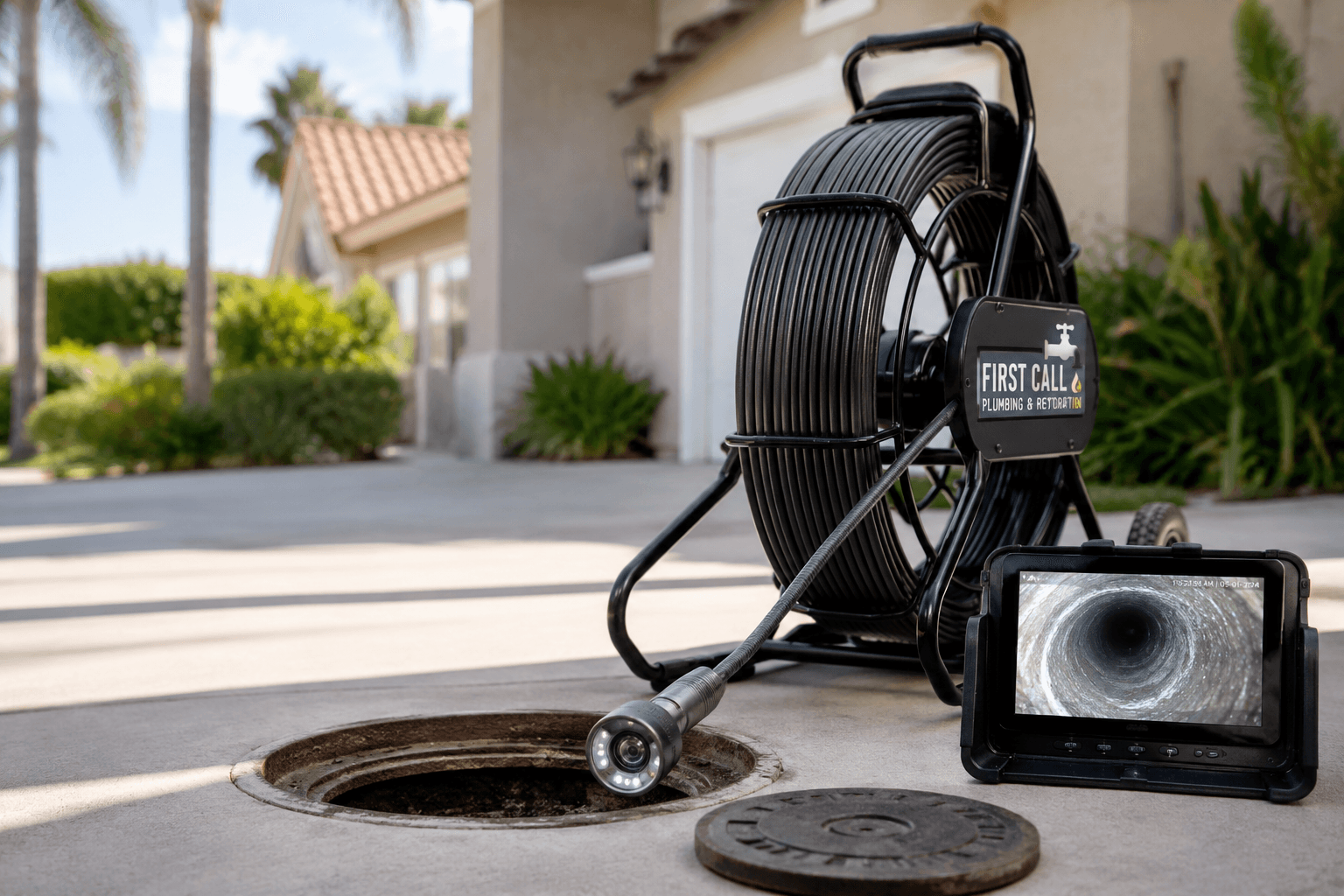
A sewer camera inspection shows the pipe material, cracks, offset joints, roots, and sags before anyone turns on the pressure. It also shows when cleaning won't solve the problem at all. A sag (called a belly) or a broken section will keep catching debris no matter how well it's cleaned, and that points to a repair such as trenchless sewer repair.
What affects the cost
National cost guides from Angi list snaking at roughly $150 to $350 per drain and hydro jetting at roughly $350 to $600, with an average near $475. Severe blockages and long main lines can cost more. These are approximate national figures, and local prices vary. The main cost drivers are:
- Which line is clogged. A single fixture drain is a smaller job than the main sewer line.
- Access. An accessible cleanout makes the job faster. Without one, the plumber may need to pull a toilet or create access.
- How bad the blockage is. Heavy roots, thick grease, or hard scale take more time.
- Length of the line. Homes set far back from the street have longer laterals to clear.
- Timing. After-hours and emergency calls can cost more than scheduled visits.
- What the camera finds. If the pipe is broken, repair is a separate job from cleaning.
Our current special is $69 snaking of one problem drain line plus a FREE HD camera inspection of the main sewer line through an existing, accessible ground-level cleanout. We snake the drain line only, not the main sewer line, and homes without an accessible cleanout may need extra access, which is quoted separately. Details are on our camera inspection page. For any other work, you get up-front pricing to approve before work begins.
Common myths about drain cleaning
- "Hydro jetting damages pipes." Not when the pipe is sound and the pressure and nozzle are matched to it. The risk is with pipe that is already cracked, thin, or made of Orangeburg, which is why the camera goes first.
- "Snaking cleaned my pipe." A snake opens a path. Buildup on the walls usually stays, which is why some lines clog again soon.
- "Jetting gets rid of roots for good." It removes the roots inside the pipe, but the crack or joint they came through is still there, so they grow back. See tree roots in your sewer line for lasting fixes.
- "Chemical drain cleaners do the same job for less." Harsh chemicals can damage older pipes, often clear only part of a clog, and make the drain riskier for whoever works on it next.
- "Every clog needs jetting." Most single-fixture clogs clear with a snake. Jetting is for buildup, roots, and repeat problems.
Get the right fix the first time
If one drain is slow, snaking is usually enough. If the same line keeps clogging or several drains back up at once, ask about jetting and a camera inspection so you know what's really going on inside the pipe.
First Call Plumbing & Restoration is open 24/7, and emergency arrival is typically 1-2 hours depending on location and call volume. Call (909) 751-2323 or contact us to schedule drain cleaning.
Frequently asked questions
Is hydro jetting better than snaking?+
It depends on the clog. Snaking is faster and costs less for a single clogged fixture. Hydro jetting is better for grease, scale, roots, and lines that keep clogging, because it cleans the whole pipe wall instead of just opening a path.
Can hydro jetting damage old pipes?+
It can if the pipe is already cracked, corroded thin, or made of Orangeburg fiber pipe. Jetting is safe for pipe in sound condition, including plastic. That's why plumbers run a camera through older clay and cast iron lines before jetting them.
How often should a sewer line be hydro jetted?+
There's no single schedule. Many homes never need it. Homes with roots in a clay line or heavy kitchen grease sometimes clean about once a year. A camera inspection shows how fast buildup returns, which helps set the right interval.
Why does my drain keep clogging after it's snaked?+
A snake opens a path through the clog but leaves buildup on the pipe walls. Repeat clogs can also come from roots, a sag in the line, or a crack. A camera inspection shows which one you have, and jetting or a repair may be the better fix.
Does hydro jetting remove tree roots?+
Yes, jetting with a root-cutting nozzle clears roots from the pipe. It doesn't seal the cracks or joints the roots came through, so they can grow back over time. Lining or repairing the pipe is the way to keep them out.
This guide is general information, not a quote or professional advice for your specific home or insurance policy. Prices are approximate - we give an up-front quote before any work begins.