Quick answer
Mold removal usually means cleaning or tearing out the mold you can see, while mold remediation is a full process that also finds and fixes the moisture that caused it. Remediation contains the area, removes damaged porous materials, cleans with HEPA filtration, and confirms the area is clear before rebuilding so growth doesn't return.
If you've found mold in your home and started calling around, you've probably heard both terms: mold removal and mold remediation. Some companies use them as if they mean the same thing. They don't, and the difference matters for whether the mold comes back.
This guide explains what each term means, what a proper remediation job looks like step by step, when a small problem is safe to handle yourself, and what drives the price.
The short answer
Mold removal usually means cleaning or tearing out the mold you can see. Mold remediation is a full process: find and fix the moisture that caused the mold, contain the area so spores don't spread, remove and clean affected materials, and confirm the area is back to normal before rebuilding.
It's also worth knowing that "removing all mold" isn't a realistic goal. Mold spores are a normal part of indoor and outdoor air. The goal of remediation is to remove the mold growth and bring the home back to normal background levels - and to fix the water problem so growth doesn't return.
| Mold removal (as often sold) | Mold remediation | |
|---|---|---|
| Main focus | Visible mold | Mold growth plus the moisture that caused it |
| Moisture source | Often not addressed | Found and fixed first |
| Containment | Often none | Plastic barriers and negative air for larger jobs |
| Porous materials | Sometimes sprayed and left in place | Moldy drywall, carpet pad, and insulation removed |
| Air cleaning | Varies | HEPA vacuuming and HEPA air filtration |
| Final check | Visual only, if any | Visual check, moisture readings, and clearance before rebuild |
What the standards say
Two main sources guide professional mold work in the U.S.:
- The EPA, which publishes guidance for homes and a more detailed guide for schools and commercial buildings that many contractors also use for homes.
- The IICRC S520, the industry standard for professional mold remediation. It describes the goal of remediation as returning the space to "Condition 1" - a normal level of mold for a similar indoor space - from "Condition 2" (settled spores from nearby growth) or "Condition 3" (actual mold growth).
The EPA also advises homeowners who hire a contractor to make sure the company has experience with mold, to check references, and to ask them to follow EPA guidance or standards from groups such as the IICRC or ACGIH.
What a proper mold remediation involves
Every job is different, but a sound remediation generally follows these steps.
1. Inspection and moisture mapping
The technician looks for visible growth, follows the odor, and uses moisture meters to find how far the water traveled. Mold almost always follows water, so mapping the moisture shows where hidden growth is likely - behind drywall, under flooring, or inside cabinets.
2. Fix the moisture source
This is the step that separates remediation from a quick cleanup. If a leaking supply line, a slab leak, a clogged AC condensate line, or a roof leak is still feeding the area, the mold will come back. The leak needs to be repaired and the structure dried.
3. Containment
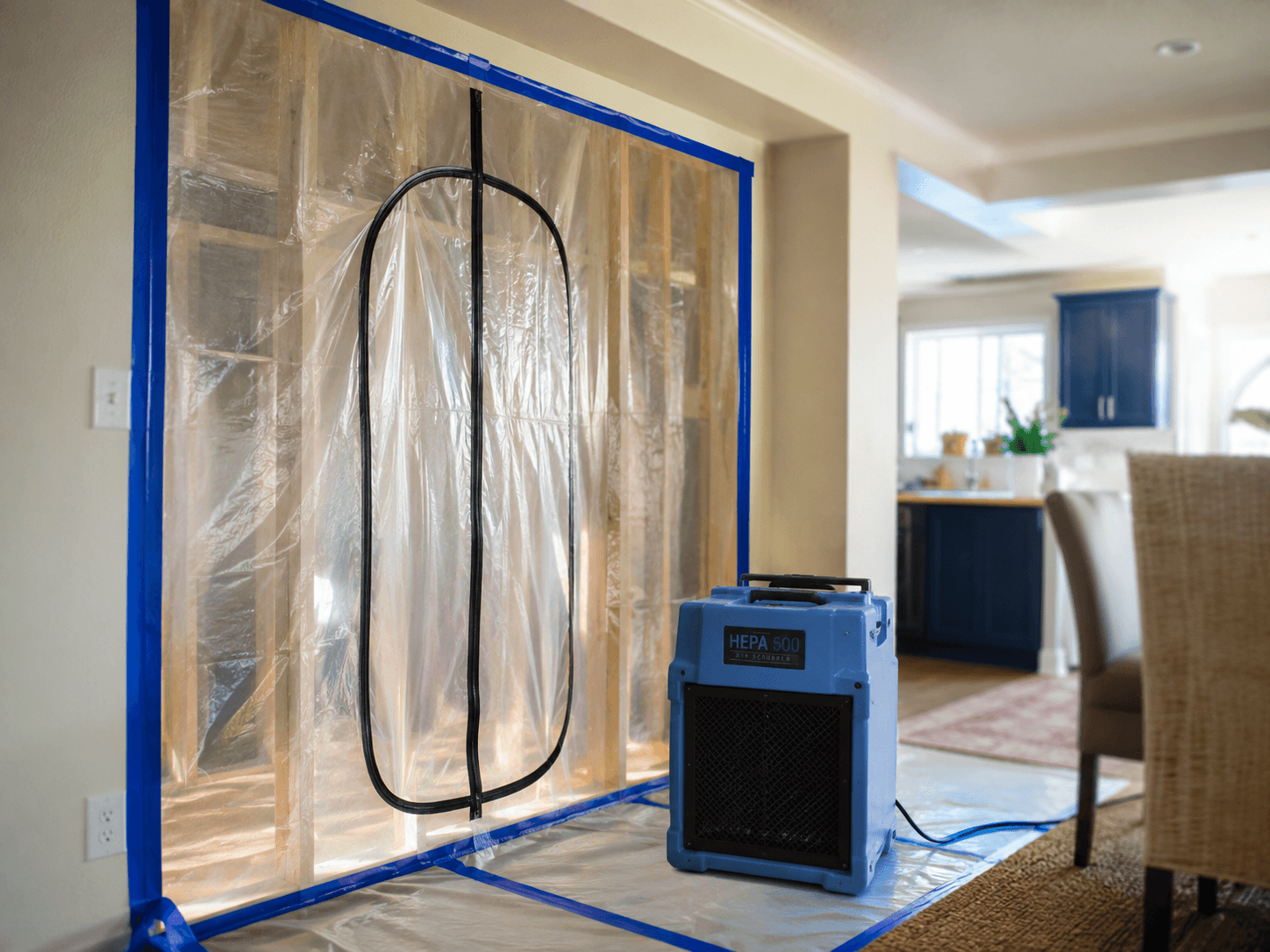
Disturbing mold releases spores. To keep them out of the rest of the house, the work area is sealed off. EPA guidance scales containment to the size of the job: for roughly 10 to 100 square feet, limited containment with a single layer of polyethylene sheeting; for more than 100 square feet, or when mold could spread through the building, full containment with double barriers, an airlock-style entry, and HEPA-filtered negative air pressure.
4. Remove damaged porous materials
The EPA notes that absorbent materials like ceiling tiles and carpet may have to be thrown away if they become moldy. Mold grows into porous materials, so you can't fully clean it out of them. Moldy drywall, carpet pad, insulation, and similar materials are cut out, bagged inside the containment, and removed.
5. Clean what stays
Hard, non-porous surfaces like framing, tile, and metal are cleaned. The EPA's basic guidance is to scrub mold off hard surfaces with detergent and water and dry them completely. Professionals add HEPA vacuuming and HEPA air scrubbers to capture spores and dust stirred up during the work.
6. Dry and verify
Before anything is closed up, materials should be dry and the area should pass a final check: no visible mold, no mold odor, and moisture readings in the normal range. Some jobs also include clearance testing by an independent inspector, especially larger ones.
7. Rebuild
Once the area is clear, drywall, flooring, cabinets, and paint are put back. A company that offers reconstruction can take you from tear-out to finished room without a handoff between contractors.
DIY or call a pro?
The EPA says that if the moldy area is less than about 10 square feet (roughly a 3-foot by 3-foot patch), in most cases you can handle it yourself. If you do:
- Fix the water problem first.
- Wear gloves, goggles, and at least an N-95 respirator.
- Scrub hard surfaces with detergent and water, then dry them completely.
- Bag and throw away small pieces of moldy porous material, like a section of carpet or a ceiling tile.
- Never mix bleach with ammonia or other cleaners - it can create toxic fumes.
Call a professional when:
- The mold covers more than about 10 square feet
- You smell mold but can't see it, or suspect it's inside walls
- The water came from a sewer backup, flood, or other contaminated source
- You suspect mold in your HVAC system - the EPA advises not running it until it's checked
- Someone in the home has asthma, mold allergies, a weakened immune system, or chronic lung disease
- The mold keeps coming back after cleaning
Do you need a mold test first? Usually not. The CDC does not recommend mold testing for most homes, since any growth needs to be removed no matter the type. Testing can still be useful in some cases, such as clearance after a large job.
What drives the cost
National cost guides such as This Old House and Angi report typical professional mold remediation in the range of roughly $1,200 to $3,750, or about $10 to $25 per square foot. Large jobs that involve much of a home can run $10,000 to $30,000 or more. These are national averages - Southern California labor and disposal costs can differ, and your price depends on the details.
| Cost driver | Why it matters |
|---|---|
| Size of the affected area | More square footage means more containment, removal, and cleaning. |
| Location | Attics, crawl spaces, and HVAC systems are harder to reach and contain than an open wall. |
| Hidden growth | Mold inside walls or under floors means more tear-out to reach it. |
| Materials involved | Removing cabinets, flooring, or insulation adds labor and disposal. |
| Water source | Sewage or floodwater adds sanitizing steps and protective measures. |
| Leak repair | Fixing the plumbing or roof problem is separate work but has to be done. |
| Rebuild | New drywall, paint, flooring, and cabinets after remediation. |
| Clearance testing | An independent clearance test, when used, is an added cost. |
We inspect first and give you an up-front quote before work starts, so you know the scope and price. If the mold came from a sudden water event, we document the damage with photos, moisture readings, and a written scope, and we can work with your insurance adjuster. Coverage is up to your policy and your insurer. For more on pricing after a leak, see our water damage restoration cost guide.
Choosing a mold remediation company
- Ask how they'll find and fix the moisture source - and whether they can do the plumbing repair themselves.
- Ask what containment they'll use and whether they run HEPA air filtration.
- Ask which materials will be removed versus cleaned, and why.
- Ask how they'll confirm the job is done before rebuilding.
- Ask about certifications. IICRC certification shows training in industry standards.
- Get the scope and price in writing.
First Call Plumbing & Restoration does both the plumbing and the mold remediation, so the leak and the damage are handled by one team. Our restoration techs are IICRC-certified, and we serve Colton, San Bernardino, Riverside, and the rest of Riverside and San Bernardino counties, plus Yorba Linda, Brea, and Placentia. To understand how quickly mold can start after a leak, read how fast mold grows after water damage.
Found mold or a musty smell? We're open 24/7. Call (909) 751-2323 or contact us online to schedule an inspection and get an up-front quote.
Frequently asked questions
Is mold remediation the same as mold removal?+
Not quite. "Mold removal" usually refers to cleaning or tearing out visible mold. Mold remediation is the full process: fixing the moisture source, containing the area, removing damaged materials, cleaning with HEPA filtration, and confirming the area is clear before rebuilding.
How big of a mold problem can I clean myself?+
The EPA says that in most cases you can handle an area smaller than about 10 square feet, roughly a 3-foot by 3-foot patch. Fix the water problem first, wear gloves, goggles, and an N-95, and dry everything completely. For larger areas, hidden mold, or sewage water, call a professional.
How much does mold remediation cost?+
National cost guides put typical jobs at roughly $1,200 to $3,750, or about $10 to $25 per square foot, with whole-home projects reaching $10,000 to $30,000 or more. Size, location, hidden growth, and rebuild work drive the price. We give an up-front quote after inspecting.
Can mold come back after remediation?+
Yes, if the moisture problem isn't fixed. Mold needs water to grow, so a remediation that doesn't repair the leak or reduce high humidity is likely to fail. The EPA recommends keeping indoor humidity below 60 percent, ideally between 30 and 50 percent.
Should I use bleach on mold?+
The EPA's basic advice for hard surfaces is to scrub with detergent and water and dry completely. Surface cleaning, with bleach or anything else, won't fix mold that has grown into porous materials like drywall, which usually need to be removed. If you do use bleach, never mix it with ammonia or other cleaners.
This guide is general information, not a quote or professional advice for your specific home or insurance policy. Prices are approximate - we give an up-front quote before any work begins.