Quick answer
After a house fire, do not go back inside until the fire department says it is safe. Then call your insurance company, secure the home with board-up and tarps, photograph everything, and save every receipt. Throw out food and medicine exposed to heat, smoke, or soot, and leave soot cleanup to trained pros.
A house fire is one of the hardest things a family can go through. Even a small kitchen fire can leave smoke, soot, and water in rooms the flames never touched. If you are reading this after a fire, take a breath. You do not have to fix everything today. You just need to take the next right step.
This guide walks through the first 24 to 72 hours in order: staying safe, calling your insurer, securing the home, documenting the damage, and deciding what to keep. It draws on guidance from the U.S. Fire Administration, the American Red Cross, and the USDA.
Step 1: Wait for the all-clear
The U.S. Fire Administration is clear on this: do not enter your damaged home unless the fire department says it is safe. Floors, ceilings, and walls may not be as strong as they look. Hot spots can flare up again, and the air can still hold smoke and fine particles.
- Leave the utilities alone. The fire department will turn off or disconnect water, power, and gas that are not safe. Do not turn them back on yourself.
- Dress for it. The Red Cross suggests leather gloves and heavy-soled shoes. A well-fitted N95 respirator helps protect your lungs from soot.
- Stay away from damaged wires. If you see fallen, damaged, or sparking wires, keep back and tell the fire department.
- Keep kids and pets out. Find somewhere else for pets to stay until cleanup is done.
- Get the incident details. Write down the fire department's name, the incident report number, and the investigator's name if there is one. Your insurer will ask.
If you need a place to stay, food, or clothing tonight, the American Red Cross can help. Call 1-800-RED-CROSS.
Step 2: Call your insurance company
Call your insurer or agent as soon as you can. Ask what they want you to do to protect the home and who you should talk to about cleanup. Write down your claim number and keep a log of every call: the date, the person's name, and what was said.
- Ask for a full copy of your policy. In California, after a covered loss, your insurer must send you a complete copy of your policy, free, within 30 calendar days of your request.
- Tell your mortgage lender or landlord about the fire.
- Tell the police if the home will be empty, so they know to watch for trespassers.
- Save every receipt for anything you spend because of the fire - hotel, meals, clothes, supplies. You may need them for your claim and your taxes.
Step 3: Secure the property
To put out a fire, firefighters often break windows and cut holes in the roof or walls. That is part of their job, but it leaves your home open to rain, wind, animals, and theft. Most homeowners policies expect you to take reasonable steps to protect the home from more damage.
Emergency board-up covers broken windows and doors with plywood. Roof tarping keeps rain out of the attic and ceilings. Both are usually the first thing a fire and smoke damage crew does on site. Ask your insurer before you sign off on larger repairs, and keep the invoice for any emergency work.
Step 4: Document everything before you clean
Before anything is moved, cleaned, or thrown out, take photos and video. It feels hard to do in the moment, but it is one of the most useful things you can do for your claim.
- Walk every room - even ones that look fine. Smoke and soot travel far.
- Take wide shots, then close-ups of burned areas, soot on walls and ceilings, and water damage.
- Open closets, cabinets, and drawers and photograph what is inside.
- Start a list of damaged belongings with rough age and value. Do not throw things away until your adjuster has seen them or says it is okay.
What to save and what to throw out
Many things can be cleaned. Some things cannot be made safe, no matter how they look. Here is what federal guidance says, plus general rules of thumb:
| Item | What to do | Why |
|---|---|---|
| Food in cardboard, plastic wrap, or other permeable packaging | Throw it out | The USDA warns toxic fumes can pass through packaging |
| Canned goods and jars near the heat | Throw them out | Heat can activate spoilage bacteria or split the containers |
| Refrigerator and freezer food | Check with care - throw out anything with an off smell or taste | Fridge seals are not airtight, so smoke fumes can get in |
| Anything touched by firefighting chemicals | Throw it out | The USDA says these chemicals cannot be washed off food |
| Medicine and drinks exposed to heat, smoke, or soot | Throw them out and ask your pharmacy about refills | The U.S. Fire Administration says not to use them |
| Clothing, bedding, hard furniture, dishes | Often cleanable by pros | Smoke and soot can usually be removed with the right methods |
| Burned cash | Handle as little as possible and wrap in plastic | Partly burned bills can often be replaced through a Federal Reserve Bank or the U.S. Treasury |
Electronics and appliances that were exposed to heat, soot, or water should not be plugged in until they have been checked. When in doubt, set it aside and ask.
Why soot cleanup is not a DIY job
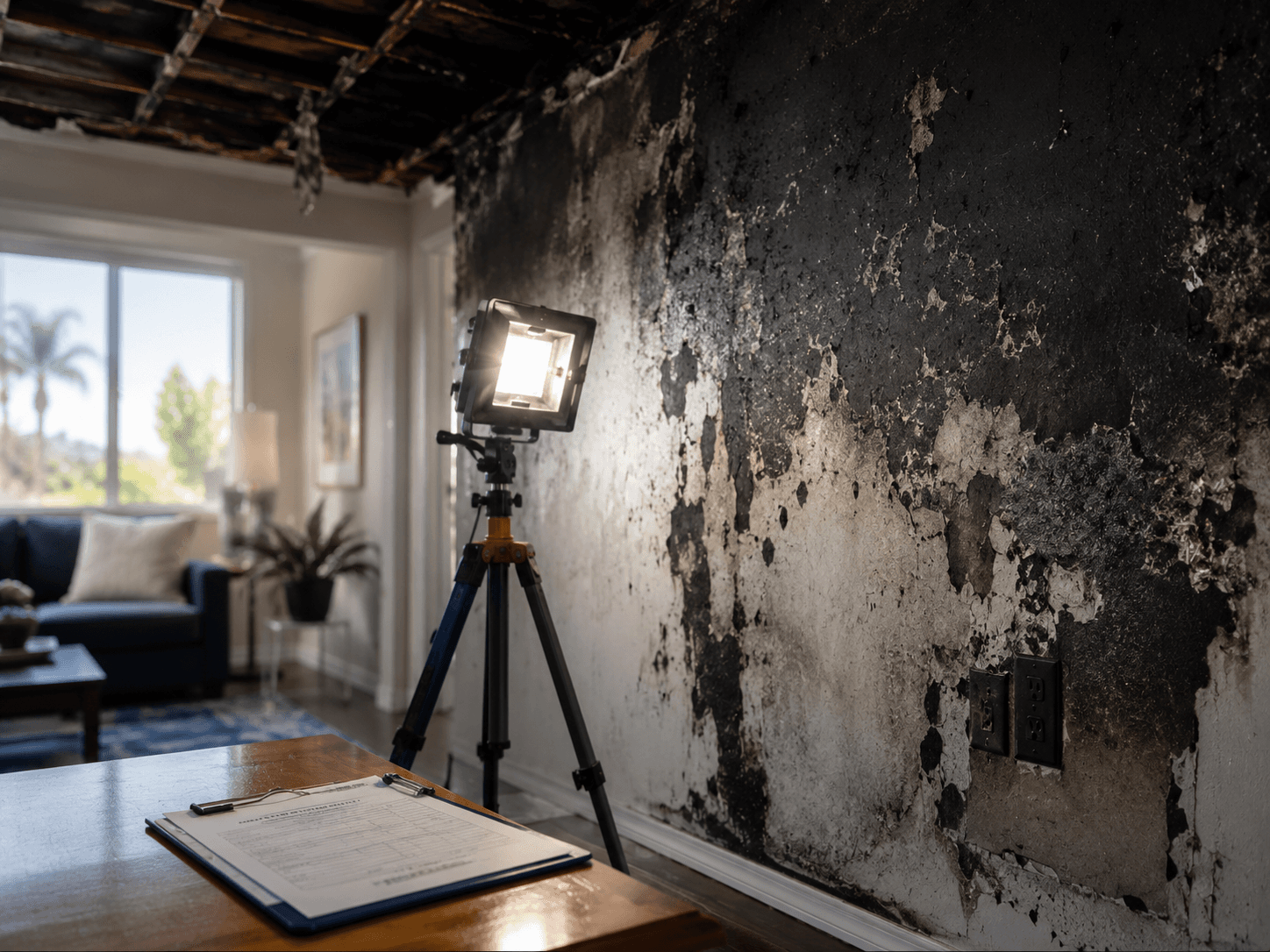
Soot is not just dust. The U.S. Fire Administration warns that the soot and dirty water left after a fire may contain things that can make you sick. Fires burn plastics, foam, and building materials, and the residue can be oily and sticky. Kitchen fires that burn food can leave a thin film you can barely see but can definitely smell.
- Wiping can make it worse. Water and household cleaners often smear soot deeper into paint, grout, and fabric. Pros usually start with HEPA vacuuming and dry soot sponges, then move to wet cleaning.
- Older homes add risk. Fire and cleanup can disturb old materials that may contain asbestos or lead paint.
- Do not run the HVAC. A running system pulls soot in through the return vents and spreads it to every room. Keep it off until the system has been checked.
Getting rid of smoke odor
Smoke odor soaks into drywall, insulation, carpet, cabinets, and clothes. Air fresheners and scented sprays only cover it up for a while. Real odor removal means cleaning or removing the source, filtering the air with HEPA air scrubbers, and, where needed, sealing surfaces before painting.
Be careful with ozone machines sold for odor removal. The EPA warns that ozone can damage the lungs, and no federal agency has approved ozone generators for use in occupied spaces.
Water damage from firefighting
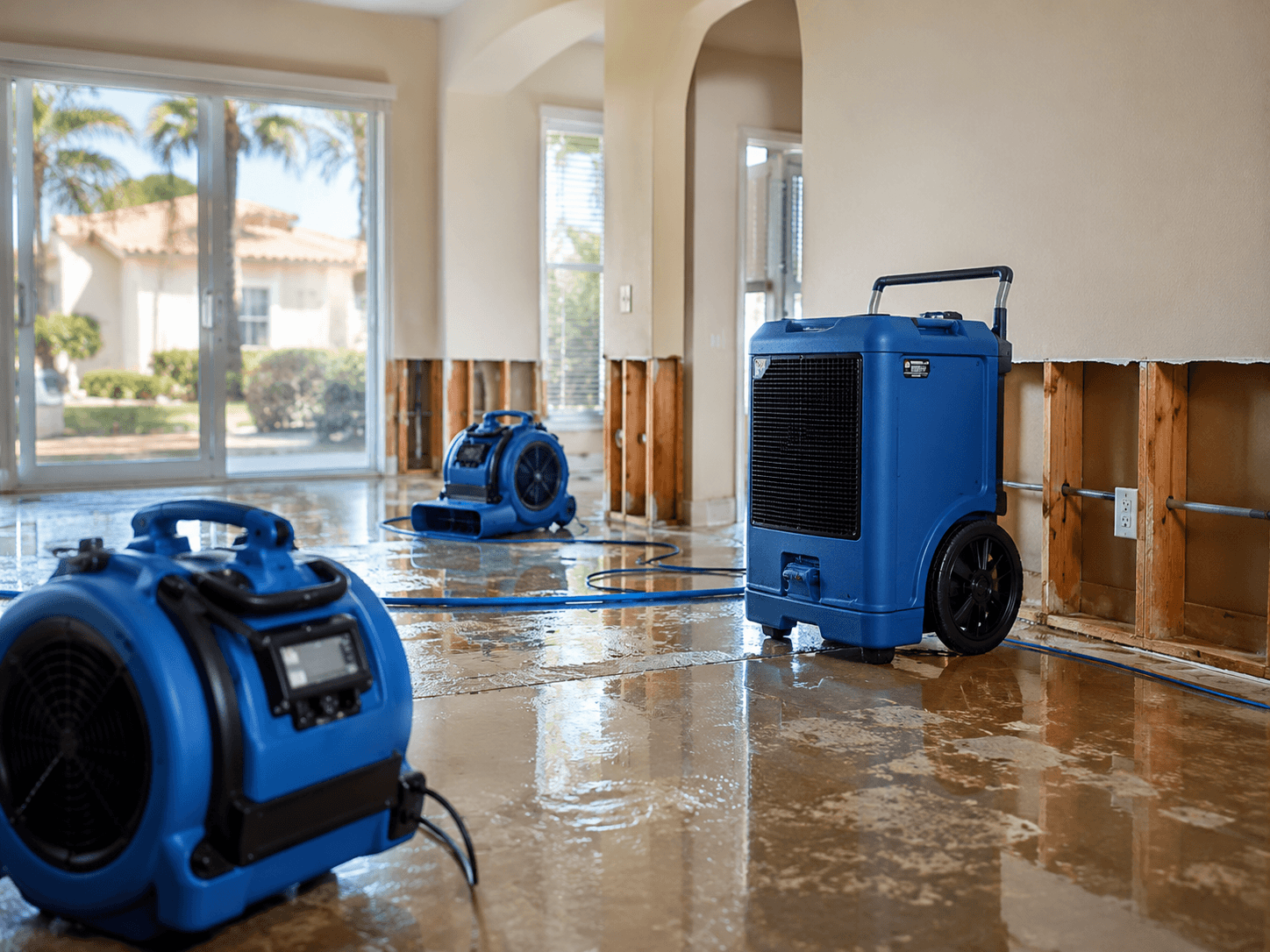
Firefighters can use a lot of water, and it soaks into floors, walls, and insulation. That water needs to come out fast. The EPA advises drying water-damaged materials within 24 to 48 hours to help prevent mold. Our water damage restoration team extracts standing water and sets up commercial drying equipment, and our first 24 hours guide explains why speed matters.
Pack-out: protecting what can be saved
A pack-out means a restoration crew carefully lists, photographs, boxes, and removes your belongings so they can be cleaned and stored while the home is repaired. It gets your things out of a damp, sooty house and gives you and your adjuster a room-by-room inventory. Items that cannot be saved are documented before they are thrown out.
Additional living expenses (ALE)
If your home is unlivable after a covered fire, your policy's loss of use or additional living expenses (ALE) coverage may help pay the extra costs of living somewhere else - like a hotel or rental and higher food costs. It usually covers costs above your normal living expenses, so keep receipts and know your usual monthly spending.
- Ask for a list. California law requires your insurer, if you ask, to give you a list of items it believes your policy covers.
- Declared disasters get more time. If the fire is part of a declared state of emergency, California requires at least 24 months of ALE coverage, with extensions up to 36 months for delays beyond your control. On a total loss, you can ask for an advance of at least four months of living expenses.
- Need help? The California Department of Insurance consumer hotline is 1-800-927-4357.
How we help
First Call Plumbing & Restoration handles fire jobs from the first night to the final coat of paint: board-up and tarping, soot and smoke odor removal, contents cleaning and pack-out, water extraction and drying, and full reconstruction. Our IICRC-certified techs document the damage with photos and a written scope, and we can work with your adjuster. We cannot promise a claim will be approved - coverage and the settlement are between you and your insurer - but we will give you clear records.
If the fire was a nearby wildfire and your home did not burn, our guide to wildfire smoke damage cleanup covers ash and smoke safety.
You do not have to figure this out alone. We are available 24/7 from our office in San Bernardino, and emergency arrival is typically 1-2 hours depending on location and call volume. Call (909) 751-2323 or contact us and we will help secure your home and start the recovery.
Frequently asked questions
When can I go back into my house after a fire?+
Only after the fire department tells you it is safe. Floors and ceilings can be weaker than they look, and utilities may have been shut off for safety. When you do go in, wear sturdy shoes, gloves, and an N95 respirator, and keep children and pets out.
Can I eat food from my fridge after a house fire?+
Be very careful. Refrigerator seals are not airtight, so smoke fumes can get inside. The USDA advises throwing out food with an off odor or flavor, food in permeable packaging, canned goods exposed to heat, and anything touched by firefighting chemicals. When in doubt, throw it out.
Should I clean soot myself?+
Light cleanup of small, hard surfaces may be fine with gloves and an N95, but most soot is best left to professionals. Soot can smear and set into surfaces when wiped with water or household cleaners, and the residue may contain harmful substances.
Does homeowners insurance pay for a hotel after a fire?+
Many policies include loss of use or additional living expenses coverage when a covered loss makes your home unlivable. It typically pays costs above your normal living expenses, so keep every receipt. Check your policy or ask your insurer for a list of what is covered.
Why is my house wet after a fire?+
Firefighters use water to put out the fire and cool hot spots. That water soaks into floors, walls, and insulation, and it needs to be extracted and dried quickly. The EPA advises drying water-damaged materials within 24 to 48 hours to help prevent mold.
This guide is general information, not a quote or professional advice for your specific home or insurance policy. Prices are approximate - we give an up-front quote before any work begins.